How to get there
From Porto Badisco, the Costa delle Ergate Trail follows stone steps, rock and dirt along the coast to the inlet.
If an access point is closed or altered, do not improvise shortcuts: use authorised routes only.
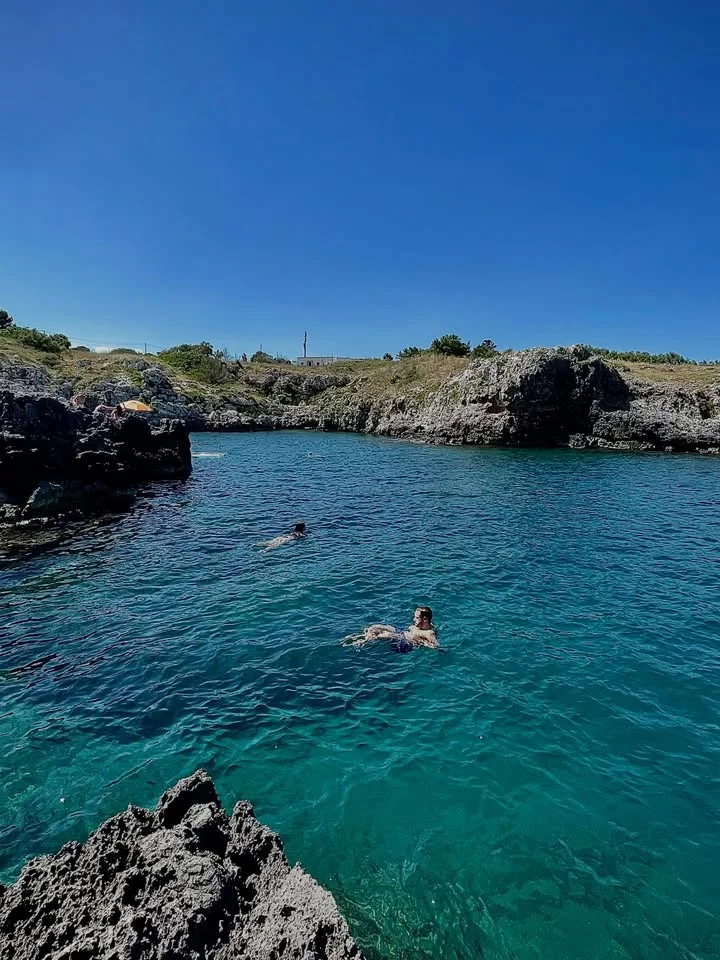
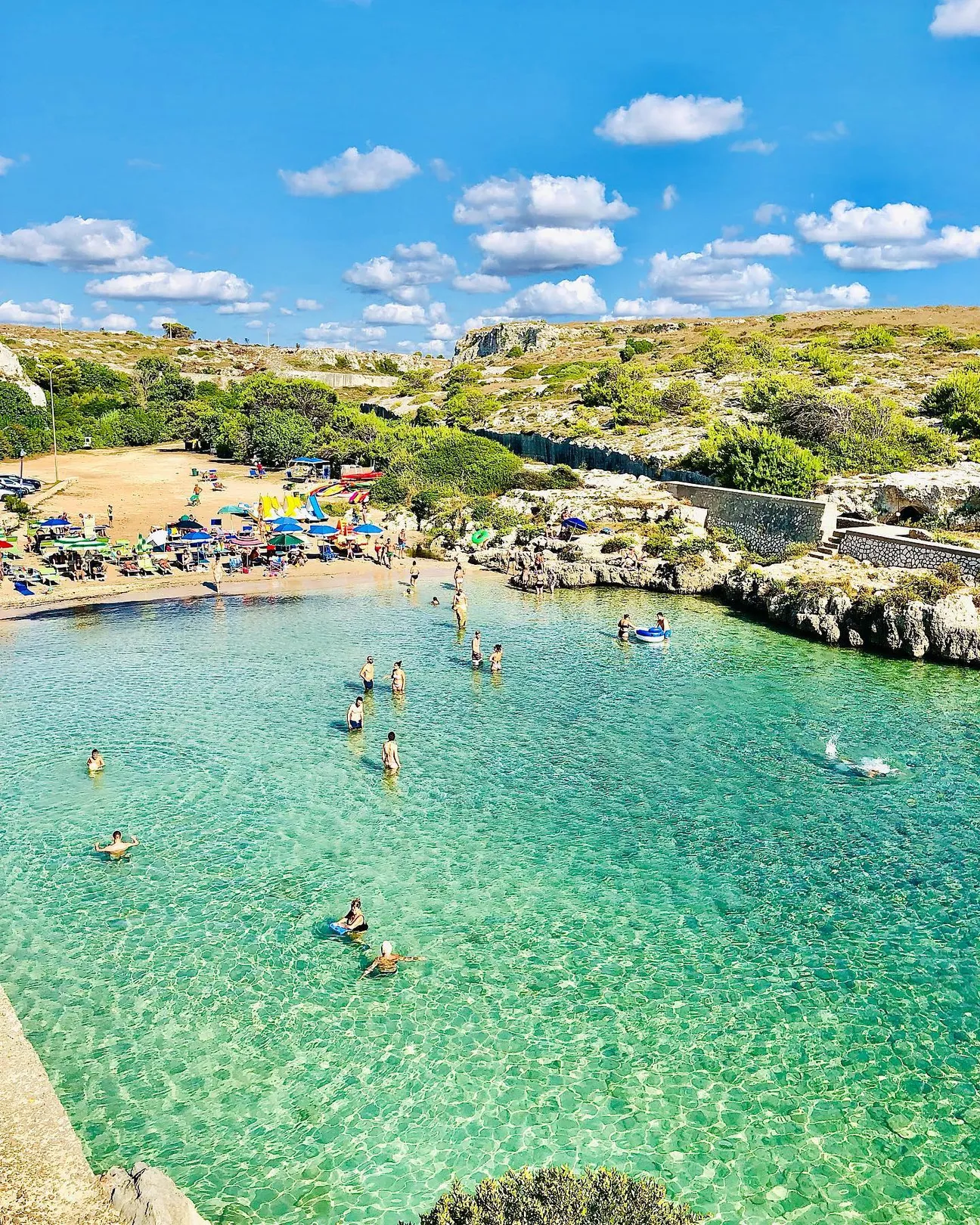
Porto Russo is a small rocky inlet south of Porto Badisco on the Costa delle Ergate Trail. The full itinerary is graded E, but Porto Russo is only one stop along it; the length of the entire loop should not be confused with the distance required to reach the cove.
Porto Russo is a small rocky inlet south of Porto Badisco on the Costa delle Ergate Trail. The full itinerary is graded E, but Porto Russo is only one stop along it; the length of the entire loop should not be confused with the distance required to reach the cove. No cliff-jump advice: depth, swell and underwater rock are not permanently controlled. Getting back onto rock can be difficult in rough sea.
From Porto Badisco, the Costa delle Ergate Trail follows stone steps, rock and dirt along the coast to the inlet.
If an access point is closed or altered, do not improvise shortcuts: use authorised routes only.
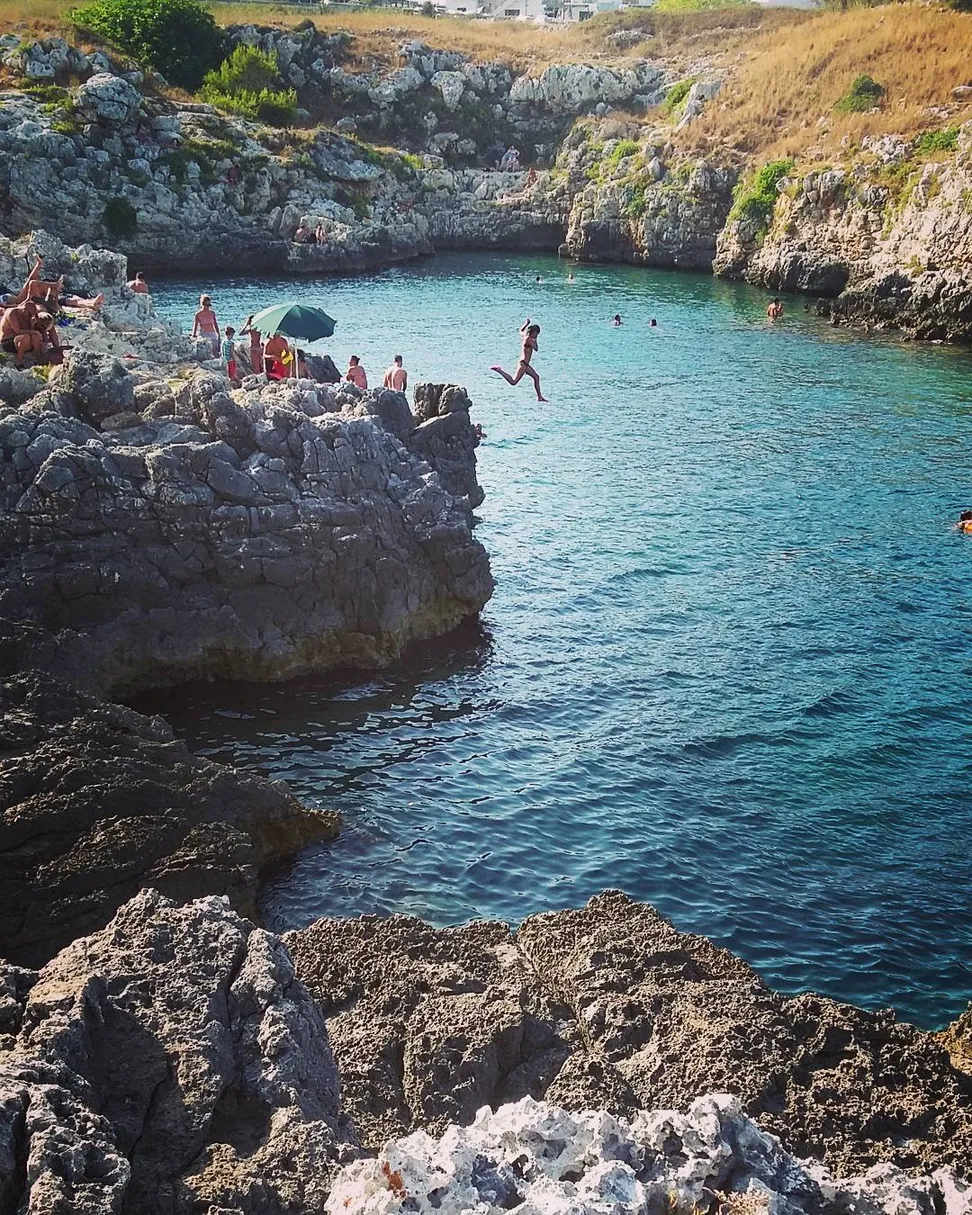
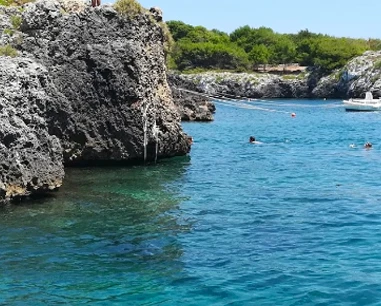
Rocky coast with variable, often rapidly increasing depth; enter only at a clear, permitted and easily reversible access.
Before moving away from shore, identify a safe exit point and do not enter if waves or current exceed your ability.
Not our first choice for toddlers, frail older visitors or anyone uncomfortable on rock and natural trails.
Before planning the day, consider access, distance from services, crowding and how easy it will be to get back.
No facilities are guaranteed at the exact point; bring water and sun protection.
Bring water and a small snack anyway, especially on free or natural stretches.
Porto Badisco fills quickly in summer; use legal parking only and continue on foot.
Do not leave valuables visible in the car and do not occupy verges, access points or unauthorised spaces.
Rock, natural trails, gradients or a sea crossing prevent a universal-access claim.
If you have specific mobility needs, check before leaving whether the route is genuinely usable that day.
No cliff-jump advice: depth, swell and underwater rock are not permanently controlled. Getting back onto rock can be difficult in rough sea.
If signs or barriers on site are more restrictive than this guide, the instructions on site always take precedence.
Choose it for natural, archaeological or scenic value rather than forcing a swim where access is unsuitable.
If actual conditions differ from those described, always follow the instructions on site.
Bring suitable walking shoes, water, a hat and sunscreen; for the islands add water shoes and a waterproof bag.
Keep your phone and documents in a waterproof case and carry your gear in a compact backpack.
The gallery shows the available and verified photographs for this place.
Have you photographed this beach or a beach club located here? Send your image to Salentissimo.it.
The photo and the details you enter will be emailed to the editorial team and checked before possible publication among the photographs of this beach.
Beach clubs and bathing establishments linked to this location.
Continue along the same coast with the linked guides.
The 2026 Speleological Register precisely identifies Antro di Porto Badisco as “Grotta Salinaci” (PU 906), with two entrances visible in the bay. It is a natural cave, not a conventional beach.
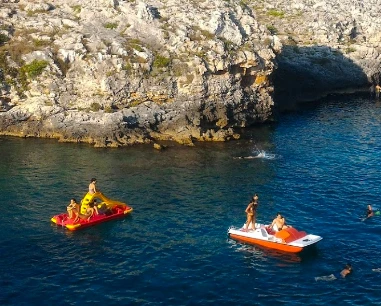
A small inlet between rocky headlands with a compact sandy section and clear water: good for families and snorkelling, but in peak summer space and parking are the main constraints.
The name “Grotta Funeraria” belongs to Porto Badisco’s prehistoric cave landscape. Historical and archaeological research documents burials and human remains in the nearby Cunicolo dei Diavoli system, but modern maps distinguish separate cavities, so the two names are not treated as automatically identical.
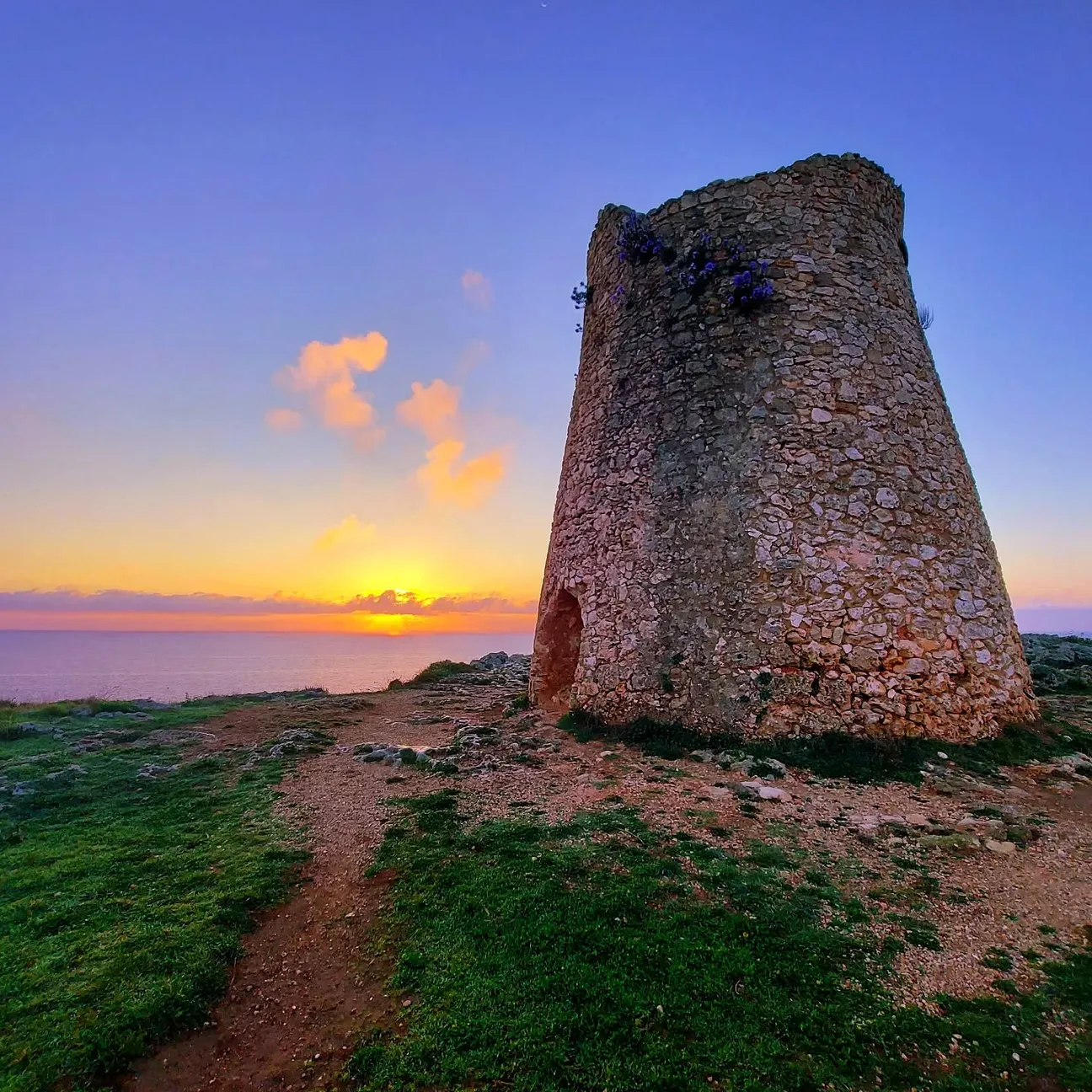
Torre Sant’Emiliano is a historic coastal watchtower on the headland between Porto Badisco and Punta Palascia. The ICCD catalogue records it as fortified military architecture on the SP87; the recommended visit is external and panoramic, with no assumption that the interior is open.
The regional cave register distinguishes Grotta di Sant’Emiliano (PU 909) from the nearby Riparo Torre Emiliano. It is a natural cavity below the Sant’Emiliano tower sector, and no safe public land descent has been verified.
The Marmitta dei Giganti was a striking karst-erosional feature with a large rounded rock. Otranto’s official visitor guide reports, however, that the site was irreparably vandalised in December 2022, so historic photographs do not necessarily show what remains today.
Grotta dei Cervi is not an ordinary sea cave for a boat visit: it is a major prehistoric underground complex at Porto Badisco, with several entrances, about 1,500 m of passages and thousands of Neolithic pictograms. The interior is protected and normally closed to unrestricted visits.
Choose a service and view all available businesses and information on its dedicated page.
Navigation follows the coastal resort configured for this location.
Location, access, families, safety and practical information.