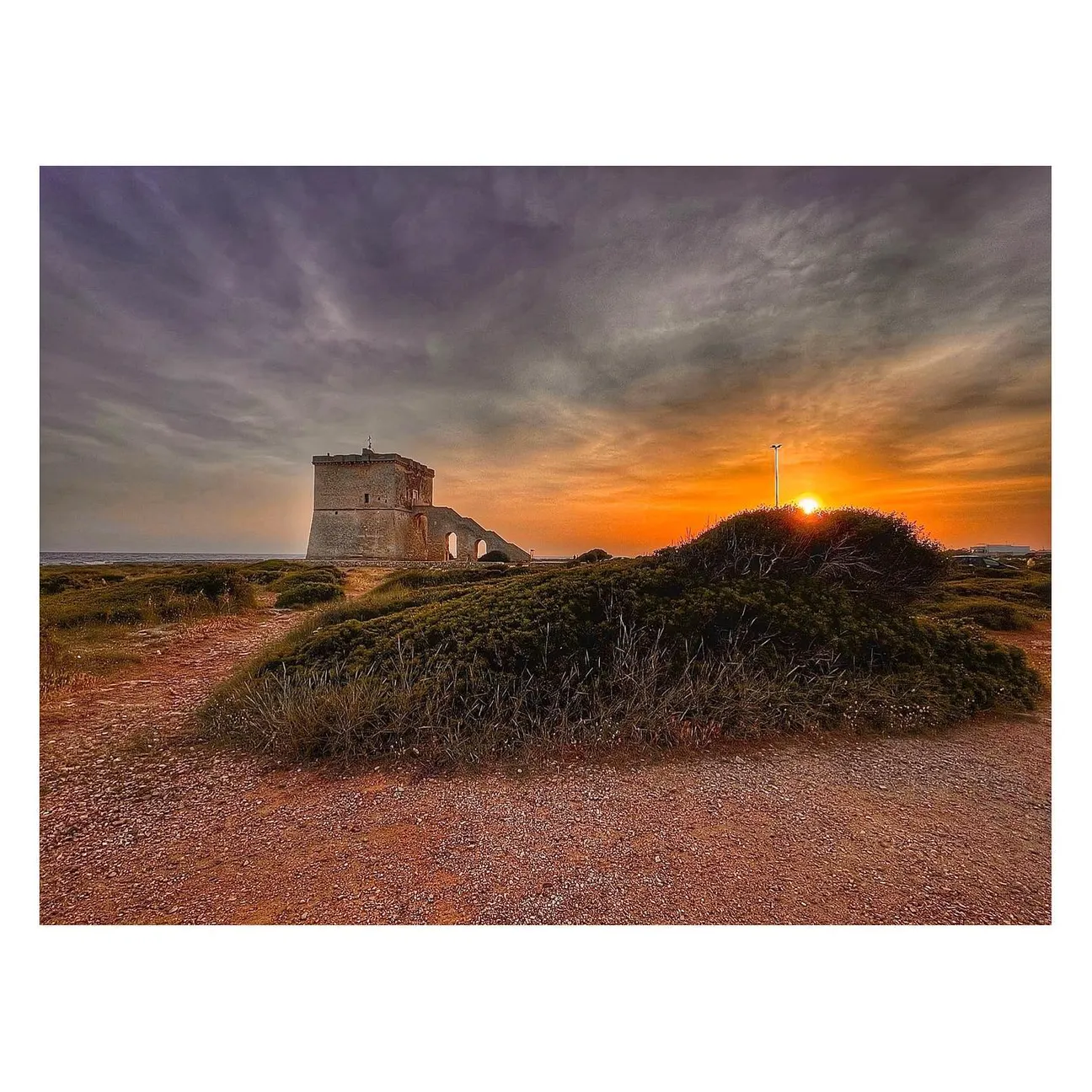
Scalo di Furno: what to know before you go
Older descriptions focused mainly on a family sandy beach. Today it is better to distinguish the free beach, the Primo Ponte channel, the rocky headland, the archaeological site and nearby private beach facilities. Seabed and services vary by section.
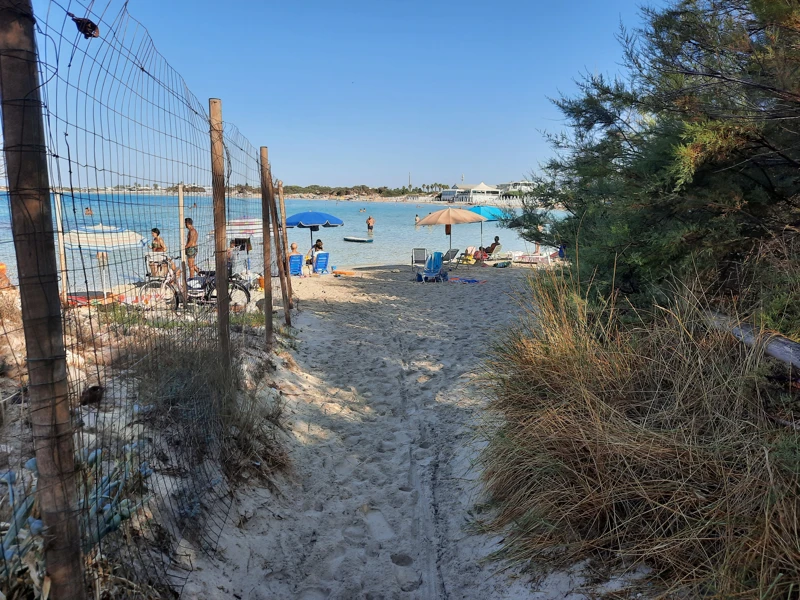
Free beach with sand and rocky sections
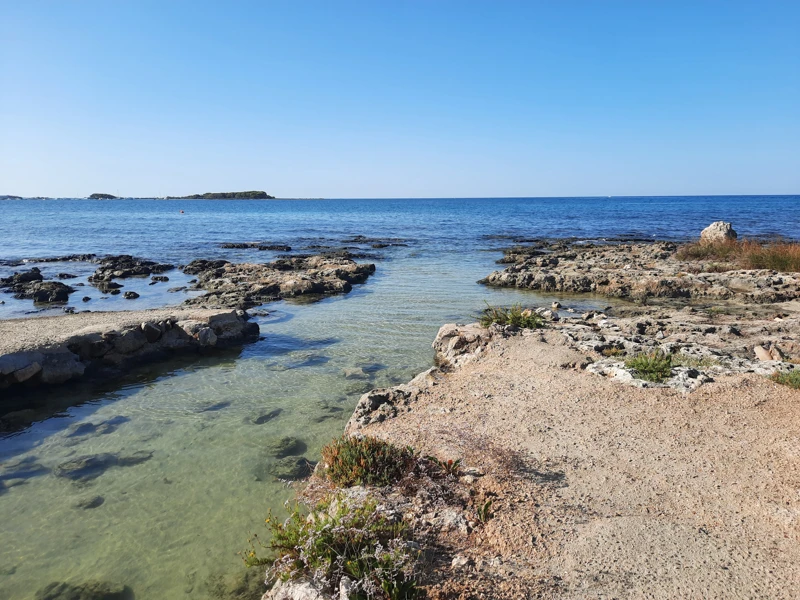
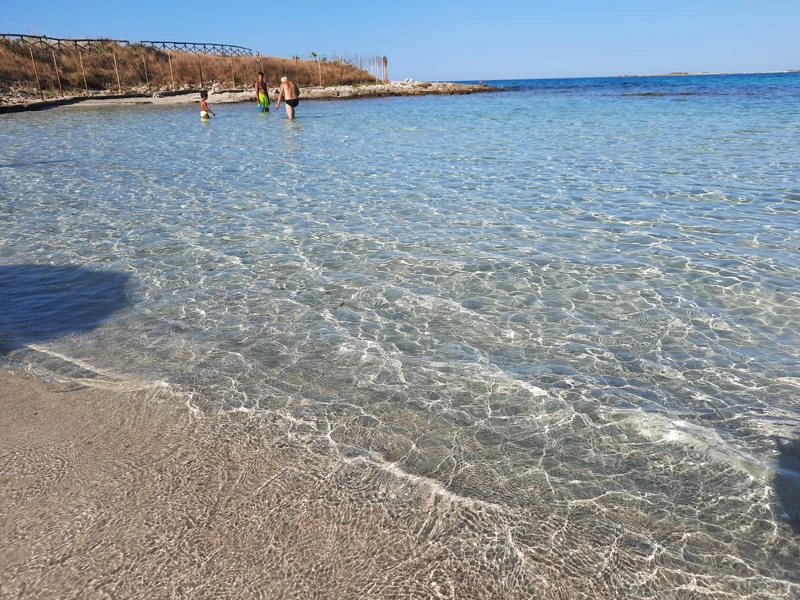
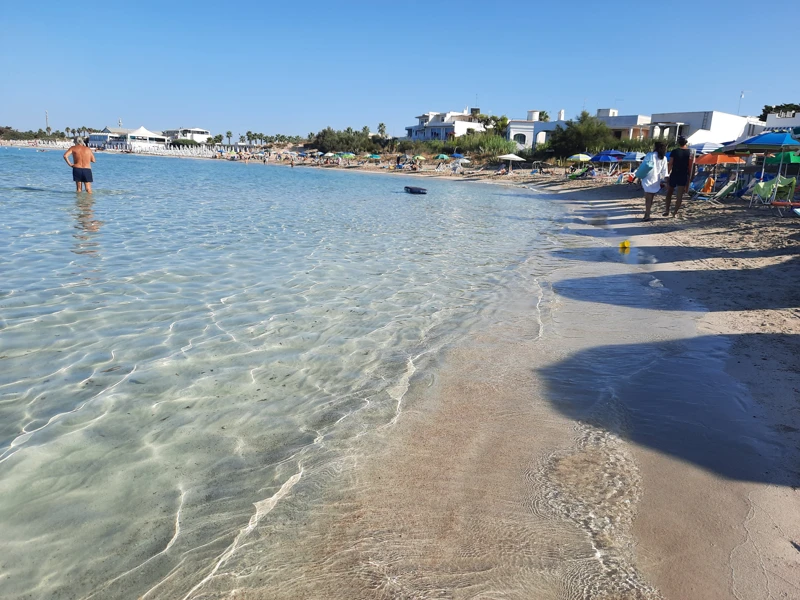
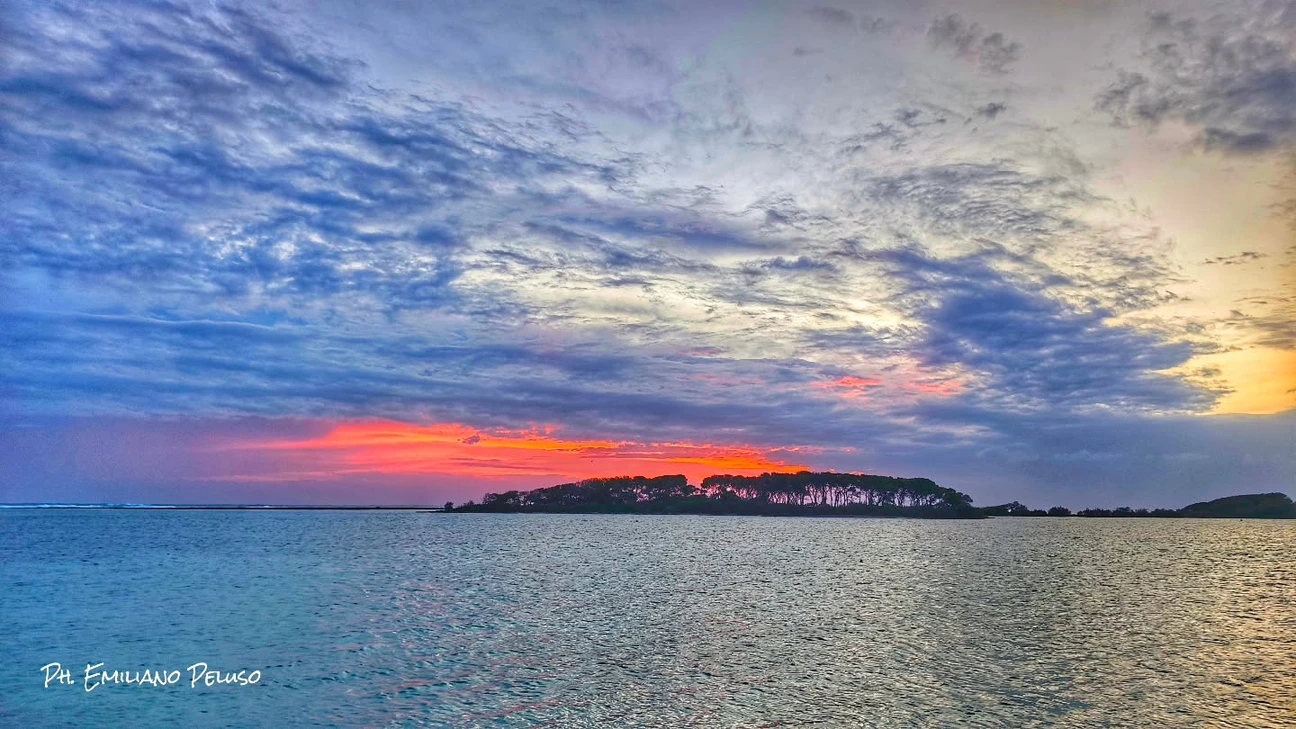
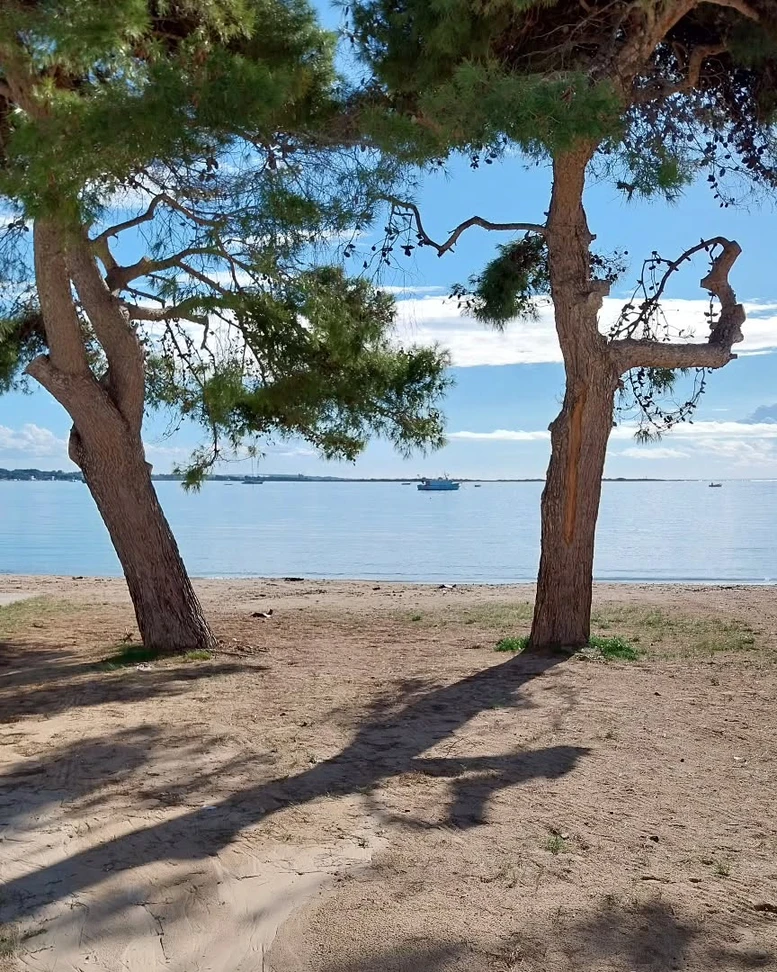
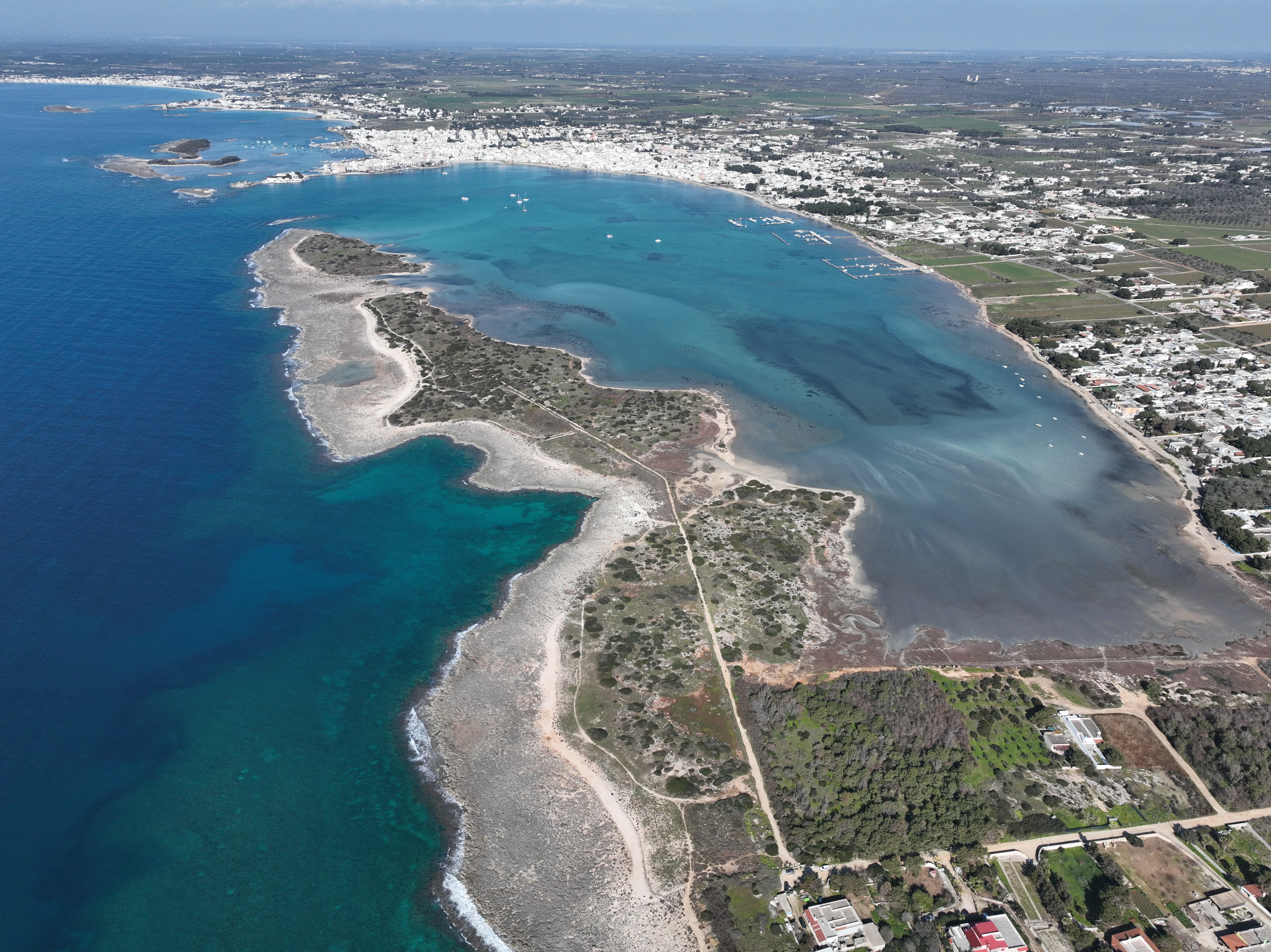
Scalo di Furno includes a free coastal strip with pale sand, while rock and less regular footholds appear towards the headland that gives the area its name. It is not uniform throughout.
Before settling
Check the exact section: sand, channel and rocky edge feel very different.
“Primo Ponte” is a local place-name
Local usage calls the first sandy section along Via dei Bacini from town Primo Ponte because of the small bridge by the channel. It need not be treated as an official administrative name.
For directions
The name is especially useful when asking locally.
Advertisement
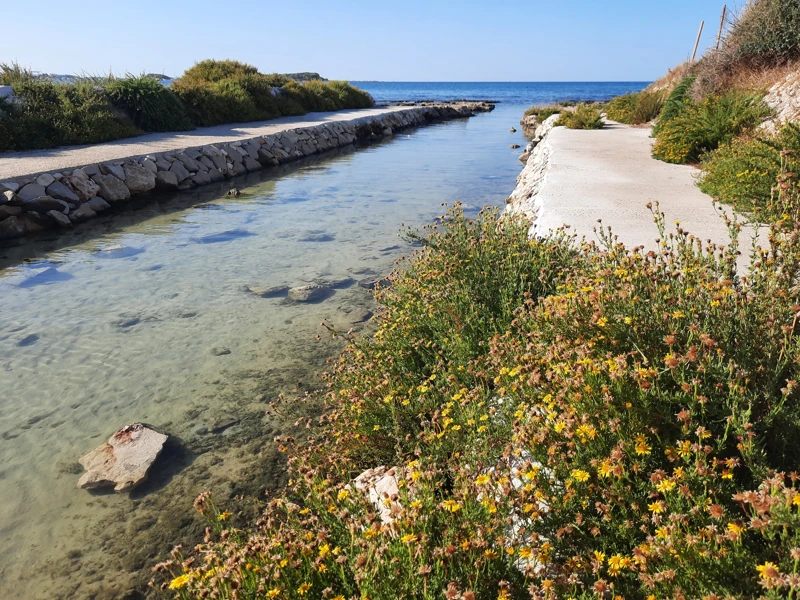
The drainage channel is part of the landscape
The small bridge crosses a channel historically described as carrying reclaimed/drainage water towards the coast before the rocky Scalo di Furno headland.
Near the outlet
Do not treat the channel as a play area or improvised route and respect any barriers.
Often gently sloping on sand, but not identical everywhere
Sandy sections can have shallow, gradual entry, popular with families. Rocks, sand steps and depth can change near the margins and after wind or storms.
With children
Check depth and bottom every visit rather than relying on the reputation for shallow water.
Families: a good option on sandy sections in calm weather
Sand and generally easy entry make parts of Scalo di Furno practical with children. In peak season, however, free space, crowds and sea conditions vary greatly.
For an easier day
Choose the sandier section, arrive early and stay close to young children.
Ionian Sea: calm water is not guaranteed
With favourable wind the water can be clear and calm, but wind and waves quickly change swimming comfort and the shoreline profile.
Before swimming
Judge the real conditions on the day and follow flags or local guidance.
Very busy at peak times
Proximity to Porto Cesareo and Via dei Bacini beach clubs makes the easiest free sections especially popular in July and August.
For more room
Early morning or late afternoon is usually best.
Free section, with private services around it
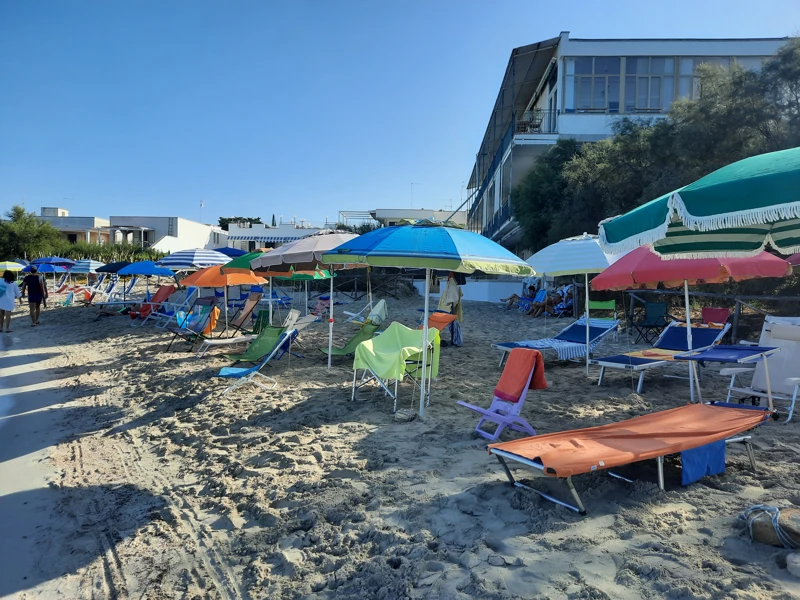
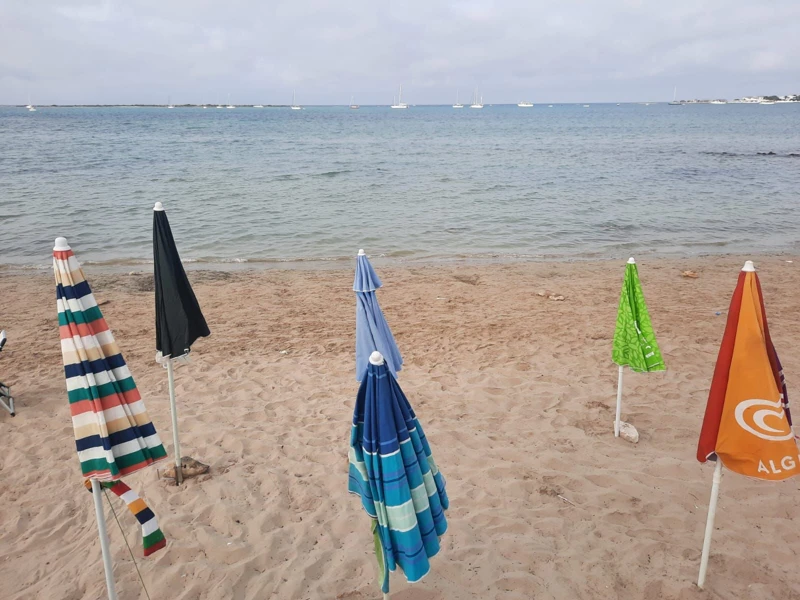
This guide covers the free Scalo di Furno strip. Private establishments also operate along the same coastline, so loungers, parasols, bars and showers should not be assumed on the free beach.
If you want facilities
Check conditions and prices at the chosen private venue; bring your own setup on the free section.
Nearby services, not guaranteed beside your towel
Via dei Bacini is a tourist area with beach clubs, accommodation and businesses. Their facilities are not automatically part of the free beach.
Come prepared
Bring water and sun protection even if you plan to use nearby businesses.
Parking: use authorised areas and consider Parcheggio Dune
In August 2026 the municipality listed Parcheggio Dune among its main park-and-ride sites, with 680 spaces and shuttle connections to the centre. This is not reserved parking for Scalo di Furno.
Peak season
Follow current signs, arrive early and expect a walk.
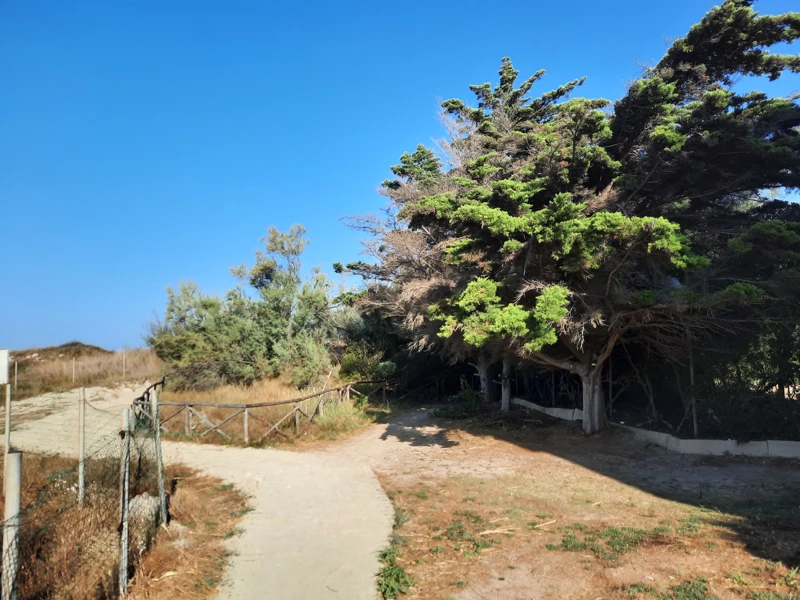
Access from Via dei Bacini
The area is reached along Via dei Bacini north of Porto Cesareo centre. Sandy sections are easier, while the archaeological/rocky headland has less regular ground.
If exploring beyond the sand
Wear suitable footwear and do not enter closed archaeological or works areas.
Accessibility: not certified for the entire free strip
Gate 4 works include visitor routes, furniture, a mobile floating pontoon and other archaeological-park facilities, but we found no certification making the entire free beach fully accessible for bathing.
Before travelling
Check the actually usable access and any accessible services operating that season.
A Bronze Age archaeological site on the coast
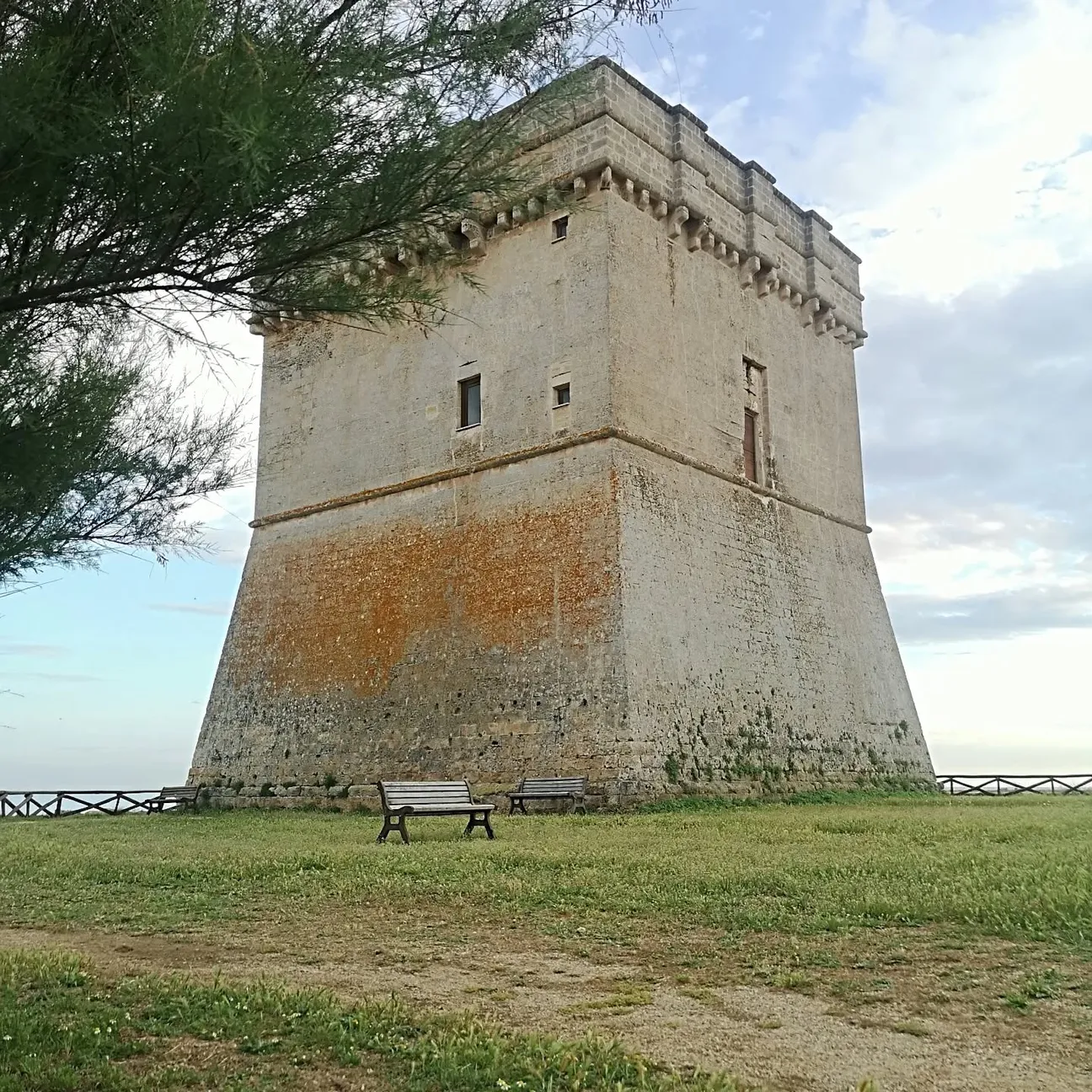
Scalo di Furno preserves a protohistoric coastal settlement with Bronze Age evidence, part of which now continues below sea level. It is one of Porto Cesareo’s key cultural sites.
During your visit
Do not move stones or collect finds; remain on open routes.
From July 2026: new coastal and underwater archaeological park
The Porto Cesareo coastal and underwater archaeological park was inaugurated on 24–25 July 2026, linking Scalo di Furno and Torre Chianca through routes focused on archaeological remains on land and underwater.
To visit
Check current opening arrangements and activities; inauguration does not mean identical free access every day.
Snorkelling: sea and archaeology have different rules
Shallow clear water can be attractive for ordinary snorkelling, while the new park also introduced archaeology-focused snorkelling experiences. Underwater archaeological remains should not be explored without respecting routes and rules.
Safer choice
Use authorised activities for archaeological snorkelling and ordinary bathing zones for normal snorkelling.
High environmental and archaeological value
The recovery project lies in a protected environmental and archaeological context and, for offshore works, within the Porto Cesareo Marine Protected Area. Protection covers habitats and seabeds as well as finds.
Respect
Do not create shortcuts, damage vegetation or touch structures and underwater remains.
Bathing water is officially monitored
The 2026 regional bulletin includes a monitoring point labelled “Scala di Furno”. Results are updated through the season and are more reliable than saying the sea is “always crystal clear”.
For current data
Check the latest official bulletin, especially after exceptional events or temporary notices.
Best for
Families choosing sandy sections, couples, older children, snorkellers and visitors wanting to combine beach time and archaeology close to Porto Cesareo.
Main appeal
Beach, rocky coast and major archaeology meet within a short distance.
Less suitable for
Anyone wanting a huge uncrowded free beach in August, facilities included everywhere, parking beside the towel or unrestricted movement through archaeological areas.
Alternative
Choose another coast section according to wind, crowds and mobility needs on the day.
What to bring
Water, sunscreen, towel, light parasol, water shoes for rocky edges and a mask for ordinary snorkelling.
If visiting the park
Travel light and respect fences, routes and staff instructions.