Grotta del Cavallo: What to know before you go
Checked practical information on access, sea conditions, services and safety. Italian Ministry of Culture records still document archaeological research permits in 2025 and ISPRA reports excavations in progress. The new page therefore prioritises protection and external viewing over the old idea of freely entering the cave.
Palaeolithic archaeological cave
Grotta del Cavallo in Uluzzo Bay is one of Salento’s most important prehistoric sites. Its long Palaeolithic sequence has produced key evidence for the study of Neanderthals, the Uluzzian and early Homo sapiens in Europe. It should not be treated as an ordinary tourist swimming cave.
Good to know
Grotta del Cavallo in Uluzzo Bay is one of Salento’s most important prehistoric sites. Its long Palaeolithic sequence has produced key evidence for the study of Neanderthals, the Uluzzian and early Homo sapiens in Europe. It should not be treated as an ordinary tourist swimming cave.
Getting there and access
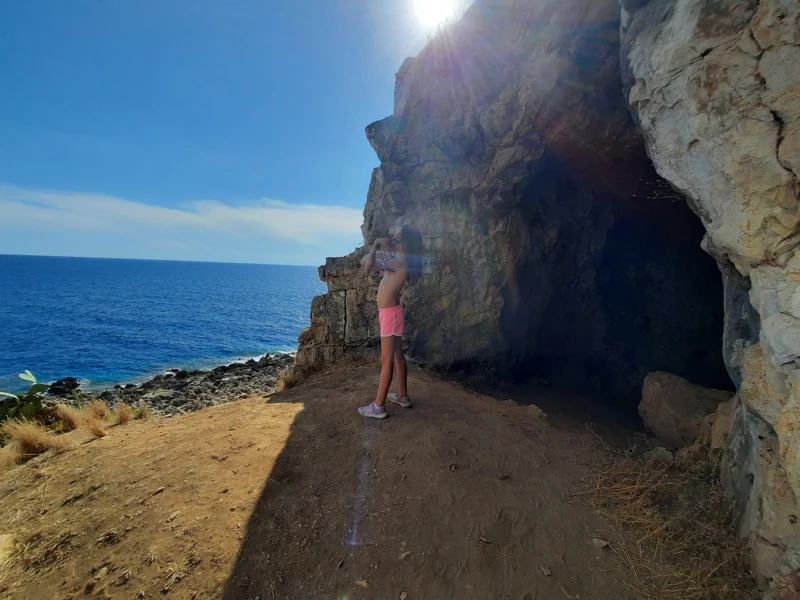
The site is reached on foot along trails in Porto Selvaggio Park and Uluzzo Bay. The cave is an archaeological research site with work still active: do not pass gates, fences or restriction signs and treat the visit mainly as an external view of the location.
Access
The site is reached on foot along trails in Porto Selvaggio Park and Uluzzo Bay. The cave is an archaeological research site with work still active: do not pass gates, fences or restriction signs and treat the visit mainly as an external view of the location.
Sea, coast and seabed
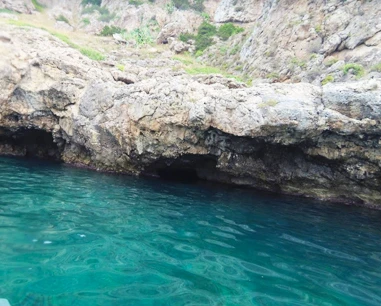
The cave opens on the rocky coast about 15 metres above sea level and is not a direct swimming access. Swim only from authorised, safer coastal points and do not use the archaeological site as a jumping spot.
Sea
The cave opens on the rocky coast about 15 metres above sea level and is not a direct swimming access. Swim only from authorised, safer coastal points and do not use the archaeological site as a jumping spot.
Families and children
Excellent for visitors interested in prehistory, archaeology, geology and cultural hiking. It is not a destination for a simple beach day with small children or for entering a show cave.
Families
Excellent for visitors interested in prehistory, archaeology, geology and cultural hiking. It is not a destination for a simple beach day with small children or for entering a show cave.
Parking and services
There are no services at the cave. Arrange parking and water before entering the park; to understand the finds and history, the most useful reference is Nardò’s Museum of Prehistory.
Planning
There are no services at the cave. Arrange parking and water before entering the park; to understand the finds and history, the most useful reference is Nardò’s Museum of Prehistory.
Accessibility
The setting is natural, with rock and uneven trails. There is no certification allowing the cave approach to be described as barrier-free; visitors with specific mobility needs should use the accessible viewpoints of the park instead.
Accessibility
The setting is natural, with rock and uneven trails. There is no certification allowing the cave approach to be described as barrier-free; visitors with specific mobility needs should use the accessible viewpoints of the park instead.
Wind and sea conditions
The old page linked the area with cliff jumping; that advice has been removed. This is a protected scientific site on a natural cliff: respect barriers, do not climb the walls and do not enter the cave without authorisation.
Safety
The old page linked the area with cliff jumping; that advice has been removed. This is a protected scientific site on a natural cliff: respect barriers, do not climb the walls and do not enter the cave without authorisation.
Swimming and snorkelling
The cave opens on the rocky coast about 15 metres above sea level and is not a direct swimming access. Swim only from authorised, safer coastal points and do not use the archaeological site as a jumping spot. The old page linked the area with cliff jumping; that advice has been removed. This is a protected scientific site on a natural cliff: respect barriers, do not climb the walls and do not enter the cave without authorisation.
Activities
The cave opens on the rocky coast about 15 metres above sea level and is not a direct swimming access. Swim only from authorised, safer coastal points and do not use the archaeological site as a jumping spot. The old page linked the area with cliff jumping; that advice has been removed. This is a protected scientific site on a natural cliff: respect barriers, do not climb the walls and do not enter the cave without authorisation.
What has changed / rules to check
Italian Ministry of Culture records still document archaeological research permits in 2025 and ISPRA reports excavations in progress. The new page therefore prioritises protection and external viewing over the old idea of freely entering the cave.
Update
Italian Ministry of Culture records still document archaeological research permits in 2025 and ISPRA reports excavations in progress. The new page therefore prioritises protection and external viewing over the old idea of freely entering the cave.
Who it suits
Excellent for visitors interested in prehistory, archaeology, geology and cultural hiking. It is not a destination for a simple beach day with small children or for entering a show cave.
Recommended
Excellent for visitors interested in prehistory, archaeology, geology and cultural hiking. It is not a destination for a simple beach day with small children or for entering a show cave.
Less suitable for
Less suitable for anyone seeking a sandy beach, easy access and services within a few metres.
Less suitable
Less suitable for anyone seeking a sandy beach, easy access and services within a few metres.
What to bring
Walking shoes, water, a hat and curiosity; for deeper context, combine the visit with Nardò’s Museum of Prehistory.
What to bring
Walking shoes, water, a hat and curiosity; for deeper context, combine the visit with Nardò’s Museum of Prehistory.