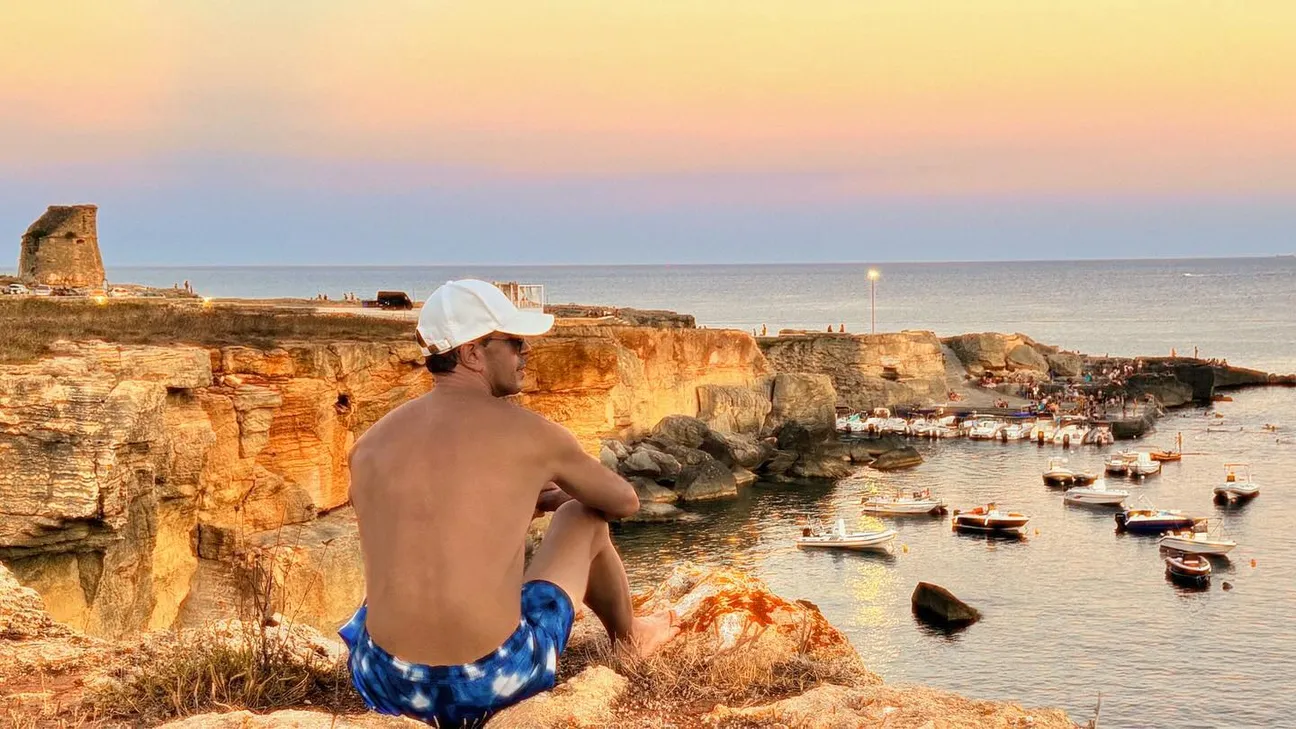
Coastal cave, not a beach
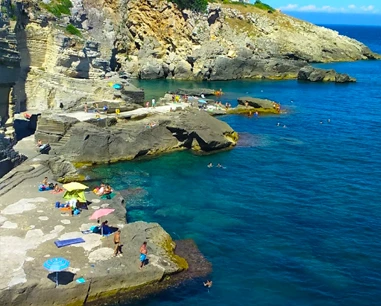
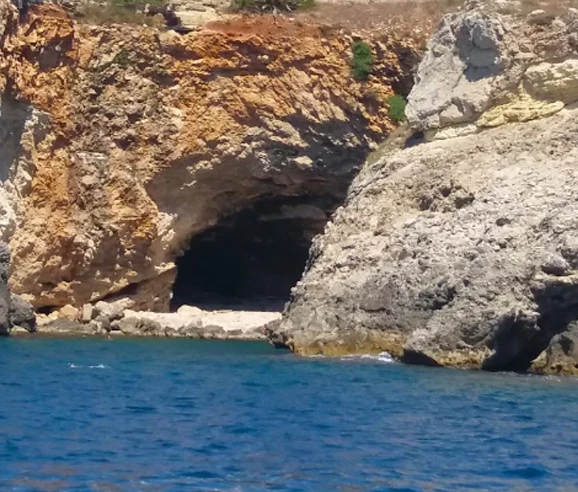
Grotta delle Streghe, also called Grotta delle Striare, is a cave in the high rocky coast of Santa Cesarea Terme. It is neither a sandy beach nor a conventional equipped bathing spot.
Good to know
Treat it primarily as a natural, geological and scenic site.
Location: the cave is on the Santa Cesarea Terme coast
We retain the old filename only so the legacy ASP page can redirect correctly.
Geographic correction
For navigation we use Santa Cesarea Terme, between Porto Miggiano and Porto Badisco.
Advertisement
For visitors, approaching from the sea is the safer option
We found no institutional source documenting a normal public walking route into the cave. To see it safely, an organised sea excursion is preferable to improvised descents on the cliff.
Before you go
Ask the operator whether the trip passes Grotta delle Striare and whether conditions allow a close approach that day.
A site documented in scientific literature
The WALIS/ESSD scientific database records Grotta delle Striare as a Late Pleistocene sea-level indicator, with a fossil tidal notch attributed to MIS 5. Its interest is therefore geological as well as scenic.
Understand the site
The rock forms preserve evidence of former sea levels; do not remove or damage geological material.
The “striare” belong to local folklore
The name refers to “striare”, witches in local storytelling. The official regional public information source presents this as legend and popular fascination surrounding the cave, not as a verified historical event.
Legend, not fact
Enjoy the story as part of Salento oral culture while keeping it separate from scientific evidence.
Sea and wind determine the visit
On this rocky coast, waves, wind and navigation safety determine whether a boat can approach. A tour may change route or skip the cave.
Pick the right day
Always follow the skipper or guide.
Snorkelling only in suitable conditions
The sea is deep and striking, but the cave should not be treated as an independent swimming target. Any swim or snorkel stop should be part of a safe organised outing and follow the guide’s instructions.
Safer choice
Do not set off from shore to reach the cave by swimming and do not enter without understanding sea and boat traffic conditions.
With children: choose an appropriate excursion
It can be interesting for families, but there is no beach, shallow water or comfortable land space. The vessel and length of the trip matter most.
With young children
Ask about recommended ages, lifejackets, boarding arrangements and shelter from spray.
Accessibility must be checked with the operator
We found no universally accessible public land route into the cave. For reduced mobility, feasibility depends on departure harbour, vessel and assistance.
Check first
Contact the operator directly before booking.
Parking depends on the boarding point
The cave has no parking of its own. If visiting by sea, park at the departure point given by the operator, which may be Castro, Porto Miggiano or another authorised harbour.
Avoid fixed assumptions
We do not publish a single parking fee or location because departure points and parking rules can change.
What to bring
Water, sun protection, a hat, waterproof phone pouch and a light layer against wind and spray. Bring mask and swimwear only if the trip explicitly includes a swimming stop.
Essential
Non-slip footwear is useful on board; beach equipment is unnecessary for a cave with no beach.