Porticeddhri: what to know before you go
This is a genuinely tiny beach in a natural coastal setting. Its appeal is the lack of infrastructure, which also means walking in, carrying your own essentials, protecting the woodland and not expecting the space or convenience of the main Baia dei Turchi beach.
A tiny sandy pocket between rock and vegetation
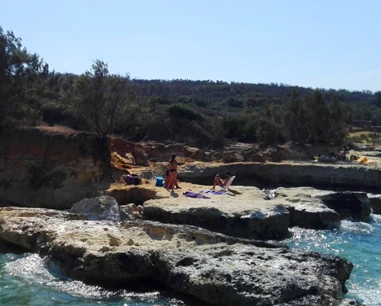
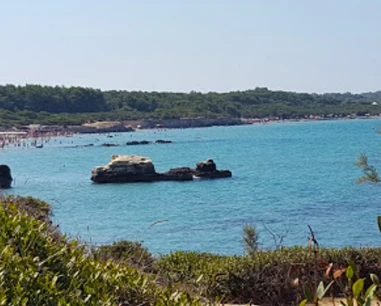
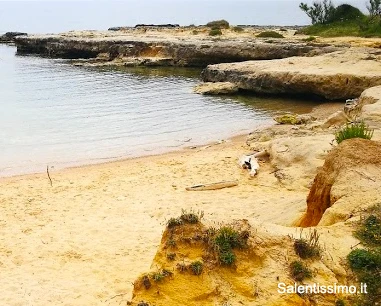
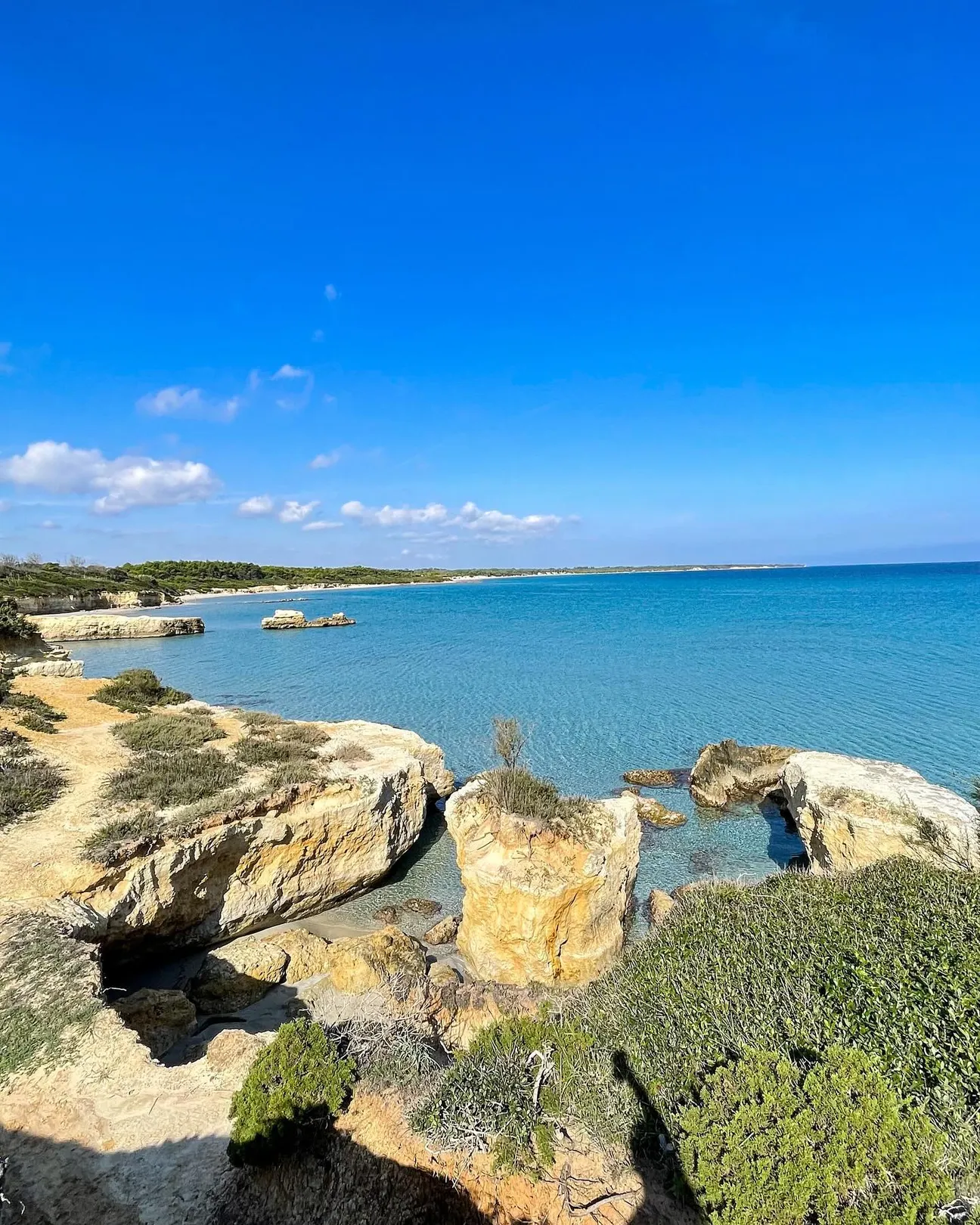
Porticeddhri is a very small patch of sand set in a mainly rocky coast, backed by Mediterranean scrub and pine woodland. The historic archive estimated little more than ten metres of sand; today it is safer simply to call it very small because storms and erosion can change the usable strip.
Do not expect a broad beach
Space is limited: if the sand is full, do not spread onto vegetation, paths or fragile margins.
Reached on foot through pine woodland and coastal paths
The beach lies between Caletta di Toraiello and Baia dei Turchi. Access involves walking through the wooded area and coastal paths; cars do not reach the beach itself.
Footwear
Light shoes or secured sandals are better for the path, with water shoes useful around the rocks.
Advertisement
Parking: leave the car outside the pine woodland, then walk
For Baia dei Turchi, vehicles should be left in authorised inland parking areas. Some may be private and paid; there is no guaranteed free space close to Porticeddhri.
Important rule
Do not drive or park in woodland and scrub when seasonal restrictions are active. Always check signs and current orders.
Mixed seabed: sand in the centre, rock at the edges
The bottom can be simpler in front of the small sandy strip, while rock and stones appear closer to the margins.
Before swimming
Check depth and footing at the actual entry point, especially after rough weather.
Families: beautiful, but not the easiest with small children
The tiny beach may look ideal for a family, but limited space, the walk in, lack of facilities and a seabed that is not uniformly shallow make it less straightforward than larger beaches nearby.
With young children
Choose Porticeddhri only in calm conditions and if you are prepared to carry everything in.
Adriatic conditions: rough water changes the cove quickly
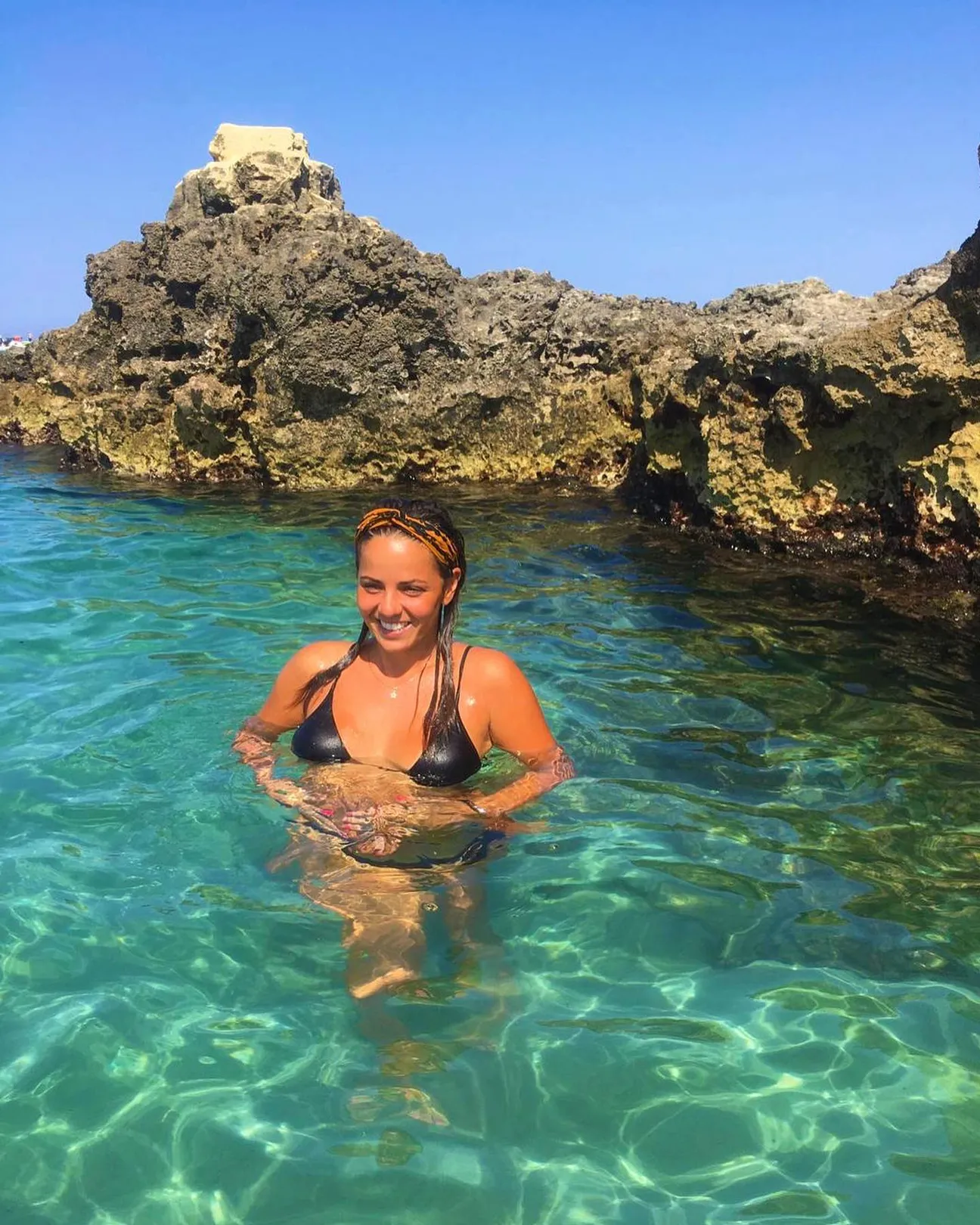
In calm weather the water can be clear and the tiny inlet very pleasant. Wind and waves can reduce the visible sand, cloud the water and make rocky access more difficult.
Before settling
Check the actual sea first: a tiny cove offers few alternatives if conditions worsen.
Snorkelling: best along the rocky margins
The contrast of sand, rock and small recesses makes the edges interesting with mask and snorkel in calm water.
How to do it
Stay near shore, avoid narrow passages and do not collect marine life or rocks.
Swimming: better for confident swimmers
Limited beach space and possible quick changes in depth make the cove more suitable for independent swimmers than complete beginners.
Stay oriented
Keep a clear reference for returning to the small exit area.
No bar, showers or toilets on the tiny beach
Porticeddhri remains natural. Do not assume bars, toilets, showers, umbrella hire or lifeguard assistance directly in the cove.
Prepare first
Bring water, light food and sun protection; services are in inland facilities or on larger beaches.
Accessibility: natural paths are a real limitation
We found no confirmation of a barrier-free public route to Porticeddhri or specific assisted bathing. The walk, natural ground and rocks may be difficult with reduced mobility.
Specific needs
For assisted sea access, choose an equipped beach in Otranto.
Do not count on solitude in high season
The historic text described unusual quiet even in summer. Today Baia dei Turchi is one of Otranto’s best-known coastal areas and Porticeddhri is tiny: a few visitors can fill most of the usable space.
For a quieter visit
Early morning or late afternoon, away from peak days.
Baia dei Turchi woodland and the Alimini Natura 2000 site
The coastal woodland belongs to the regional Alimini forest complex, and the area falls within ZSC IT9150011 “Alimini” of the Natura 2000 network.
Geographic note
Do not confuse this area with the Costa Otranto–Santa Maria di Leuca e Bosco di Tricase Regional Park, which covers another stretch of Salento coast.
Pine woodland, scrub and dunes must be kept clear
In recent summers the municipality has issued measures protecting woodland and scrub, restricting vehicle access and prohibiting beach equipment on the dune cordon.
Good behaviour
Use paths, do not create shortcuts and do not settle on vegetation or dunes.
From 2024: wildfire-prevention work in Baia dei Turchi woodland
Puglia Region authorised forestry work to reduce wildfire risk in the Baia dei Turchi woodland inside ZSC Alimini, underlining how vulnerable the forest-scrub system is in summer.
No flames
Avoid smoking or flames near vegetation and obey seasonal closures or restrictions.
A good stop on a walk between Toraiello and Baia dei Turchi
Porticeddhri makes most sense as one stop along the coastal route linking small coves and the main bay, rather than a beach reached with heavy beach-club equipment.
If walking
Carry water, protect yourself from the sun and stay on recognisable routes.
Best for
Couples, younger visitors, swimmers and snorkellers who enjoy tiny natural beaches, little infrastructure and a walk through vegetation.
Main appeal
The intimate scale and contrast of sand, rock and pine woodland.
Less suitable for
Anyone wanting parking beside the sea, bars and toilets on the beach, lots of space, verified barrier-free access or a very easy day with young children.
Alternative
For more space and services consider Baia dei Turchi or Alimini.
What to bring
Plenty of water, towel or mat, sunscreen, hat, walking shoes, water shoes, mask and snorkel, plus a bag to take every piece of rubbish away.
Keep it light
You walk in, so take only useful, lightweight gear.