Sant’Andrea: what to know before visiting the sea stacks
This is a rocky natural attraction rather than a large sandy beach, so cliff edges, access points and sea conditions deserve extra care.
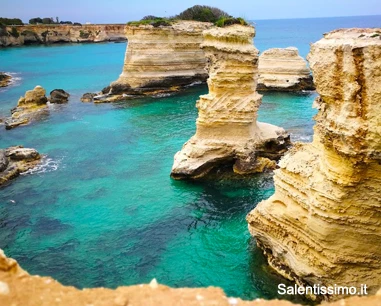
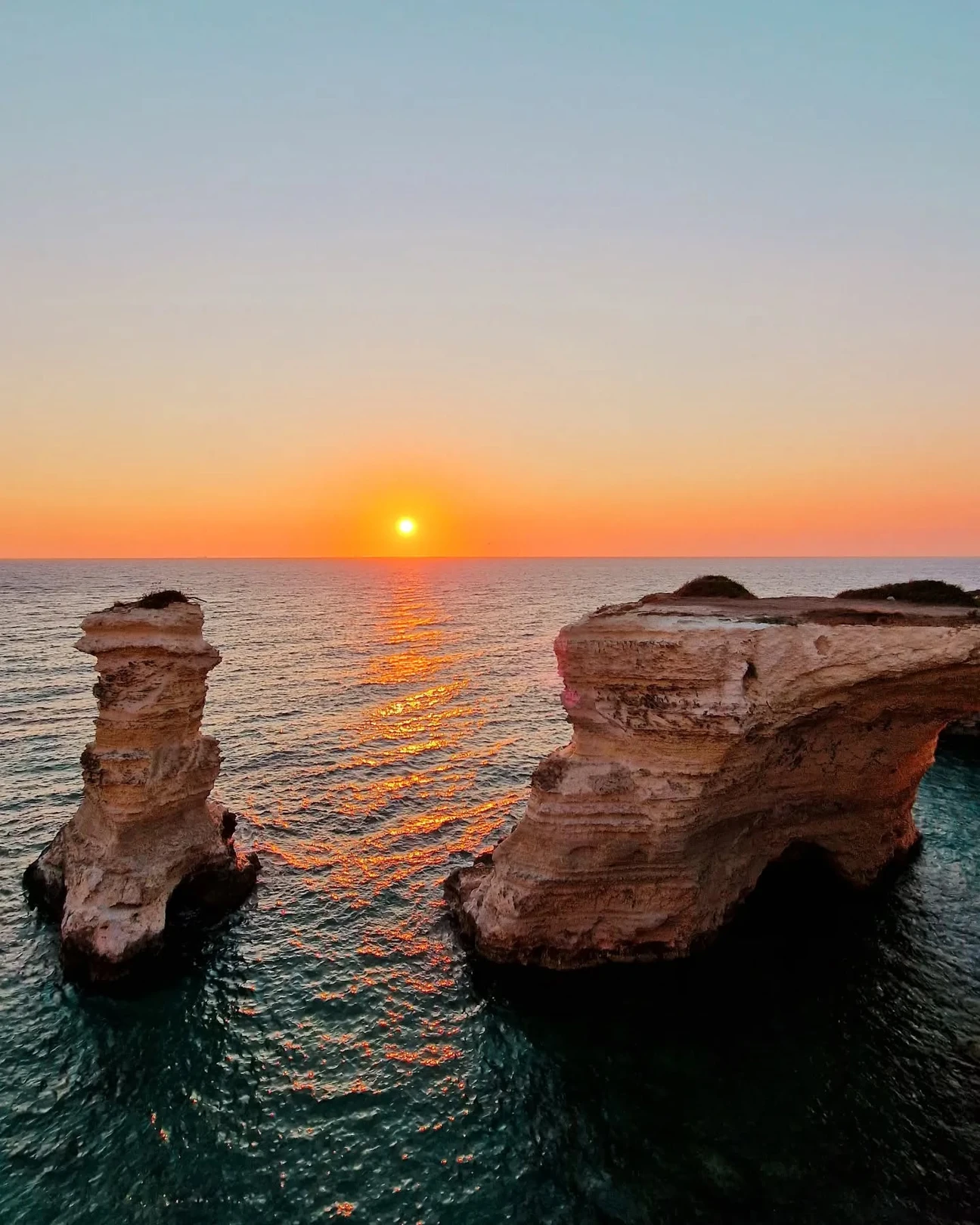
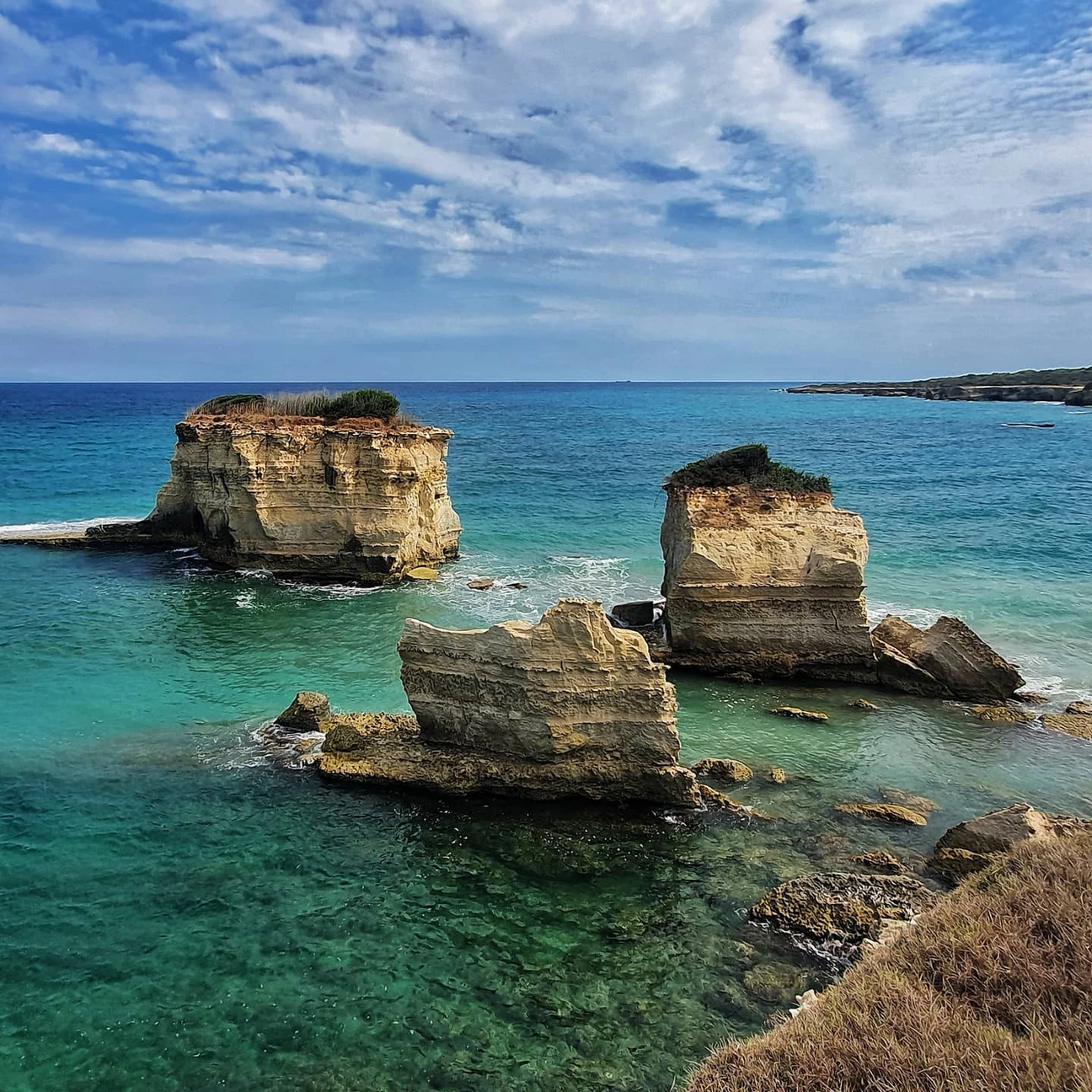
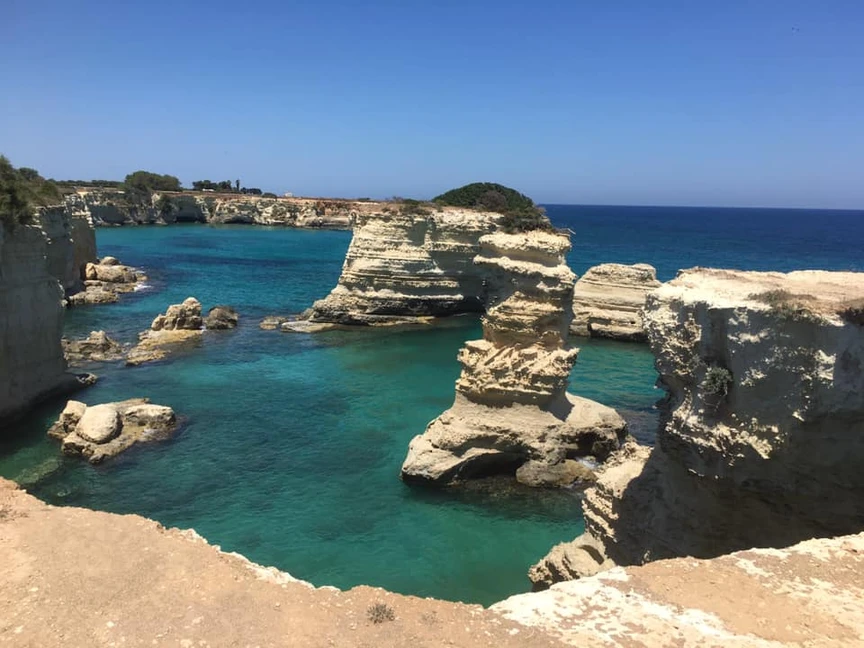
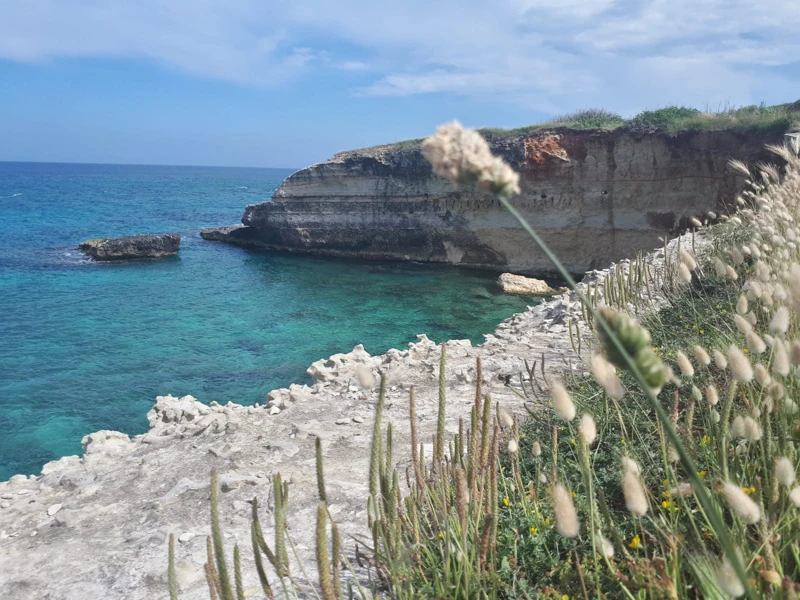
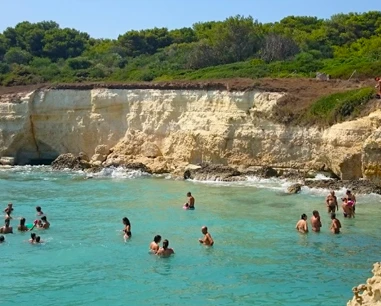
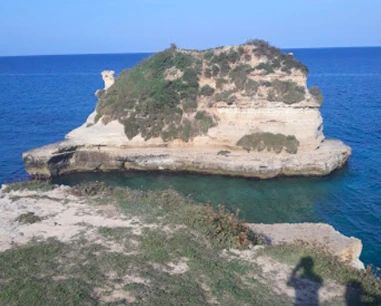
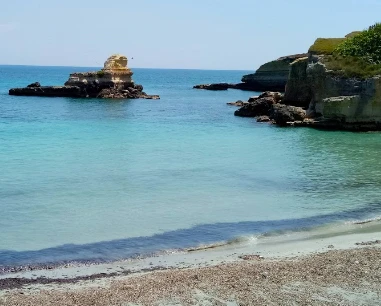
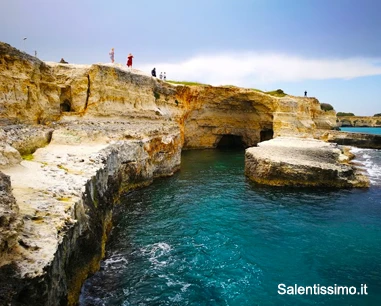
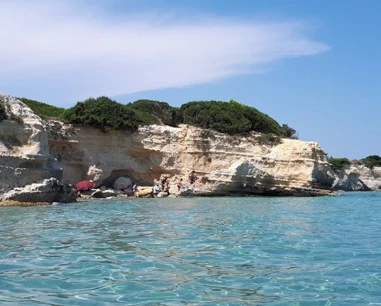
Sea stacks, caves and rocky coves
a rugged coast with isolated rocks, small caves and clear water. The sea stacks are the main attraction rather than a large sandy beach.
Practical tip
Choose a bathing point only after checking access, waves and depth.
15 February 2026: the Lovers’ Arch collapsed
After heavy rain and storm surges, Sant’Andrea’s famous natural arch completely crumbled into the sea. Older photographs therefore show a formation that no longer exists.
Practical tip
Do not approach debris, unstable edges or cliffs to recreate old photos.
Advertisement
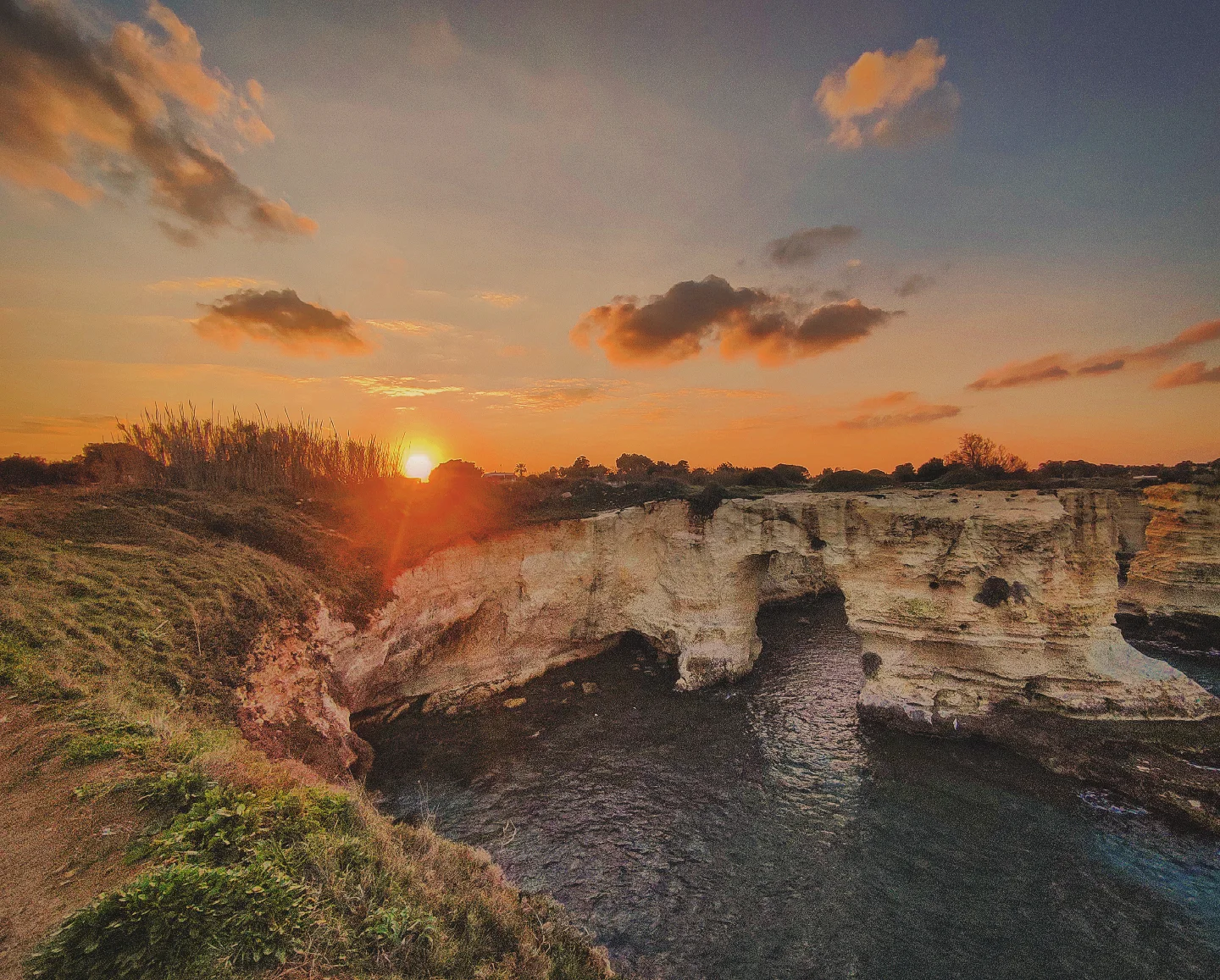
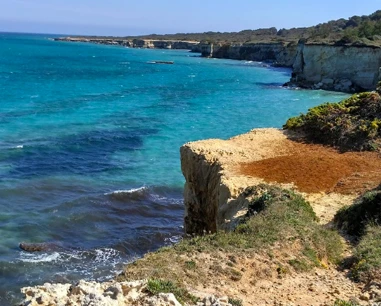
The cliff is actively eroding
The 2026 collapse prompted official inspections and renewed attention to erosion along high rocky coasts.
Practical tip
Stay on open paths, respect barriers and avoid standing below unstable rock faces.
Sea access points can change
Rocky descents, steps and small openings are found in different places. Old online descriptions may be outdated after storms and collapses.
Practical tip
Use only access points that are visibly open and safe on the day.
Summer parking is managed seasonally
For 2026 Melendugno Municipality launched procedures for temporary summer parking areas in its seaside resorts.
Practical tip
Arrive early and follow current signs; availability and prices can change.
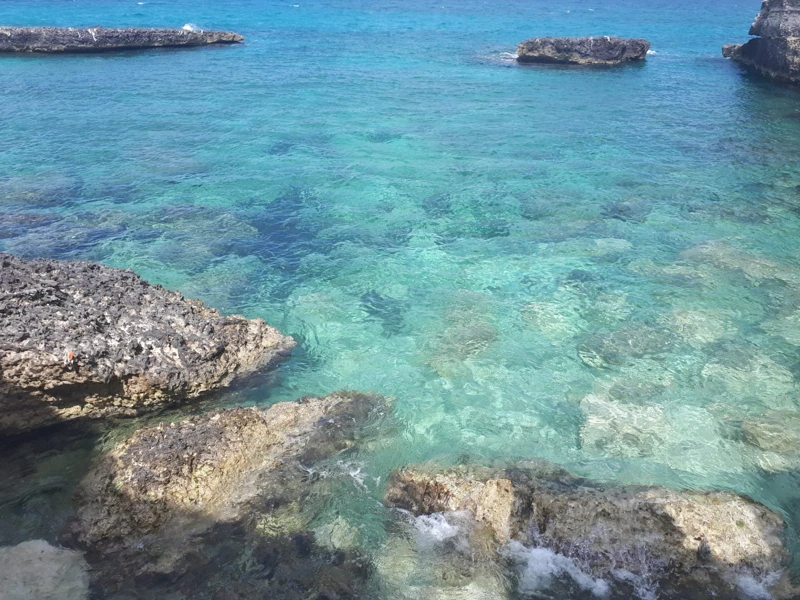
Rocky seabed and variable depth
Around the sea stacks the bottom is rocky and depth does not behave like a gradual sandy beach.
Practical tip
Water shoes can help; weak swimmers and children should use only simple entry points in calm conditions.
Families: excellent viewpoint, less simple for a full beach day
Rock, cliff edges, irregular access and limited sand require more attention than Alimini or Torre dell’Orso.
Practical tip
With very young children, consider Sant’Andrea as a scenic stop and use a sandy beach nearby for a long swim day.
Services are in the resort, not beside every cove
Sant’Andrea is a small seaside resort, but the sea stacks and natural stretches do not have services evenly distributed along the whole coast.
Practical tip
Bring water and what you need for a few hours; do not rely on a bar, showers or toilets right beside your chosen viewpoint.
Natural terrain limits accessibility
Cliffs, rocks and sea descents make many sections difficult for wheelchairs and reduced mobility.
Practical tip
For specific needs, verify a concrete viewpoint or equipped sea-access point before travelling.
Popular for photos, swimming and rocky scenery
Sant’Andrea is particularly attractive to young visitors and photographers because of its shapes and clear water.
Practical tip
Avoid cliff jumps, climbing and risky passages for photos or videos.
Rough sea makes this coast much harder
Wave action against rock and sea stacks increases risk, and the famous 2026 collapse followed severe storms.
Practical tip
With rough sea, enjoy the view from a safe point and postpone swimming.
Swimming among the stacks requires judgement
Distance, depth, waves and local boat traffic can all change the real difficulty.
Practical tip
Stay within your ability and near an exit point; there is no need to reach a stack to enjoy the place.
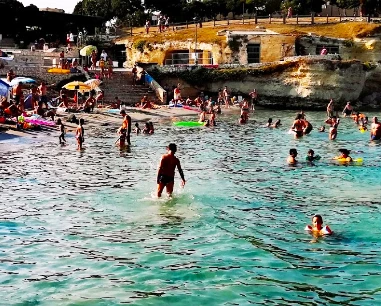
Few easy spots mean heavy pressure at peak times
Sant’Andrea has more fragmented bathing spaces than a large beach. In high season the easiest access points can become crowded.
Practical tip
Arrive early and do not block steps, passages or sea access with towels or equipment.
Who it suits
Photographers, couples, young visitors, lovers of rocky scenery, snorkelling and short panoramic stops along the Adriatic coast.
Strong point
One of the strongest choices if you are looking for nature and geological forms rather than beach-club comfort.
Less suitable for
Families wanting a broad sandy beach and gradual seabed, people with mobility difficulties, or anyone planning to spend the whole day with lots of equipment a few metres from the car.
Alternative
Torre dell’Orso, a little farther north, offers a large sandy beach with services.
What to bring
Water, sun protection, stable footwear, water shoes and a mask only when the sea is calm.
Safety first
Avoid slippery flip-flops on rock and travel light.