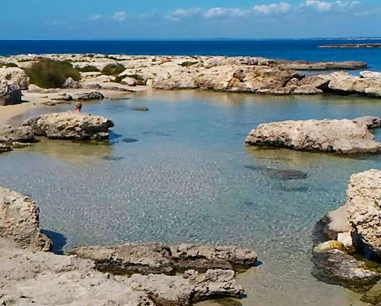
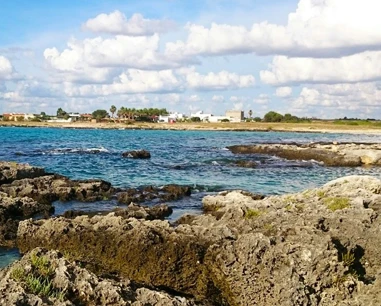
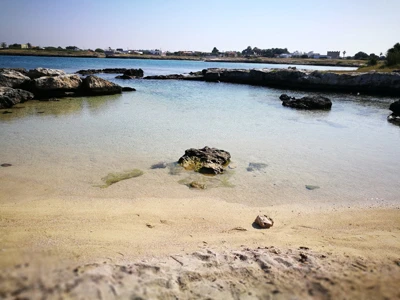
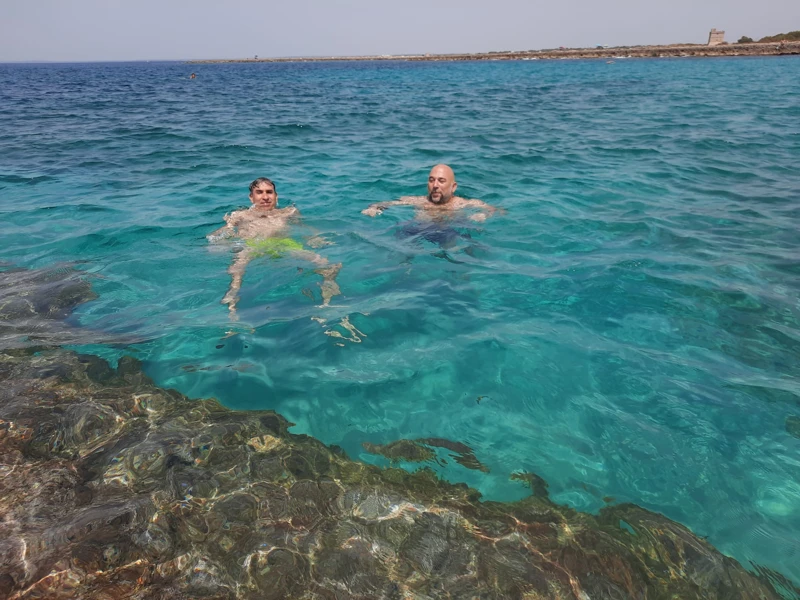
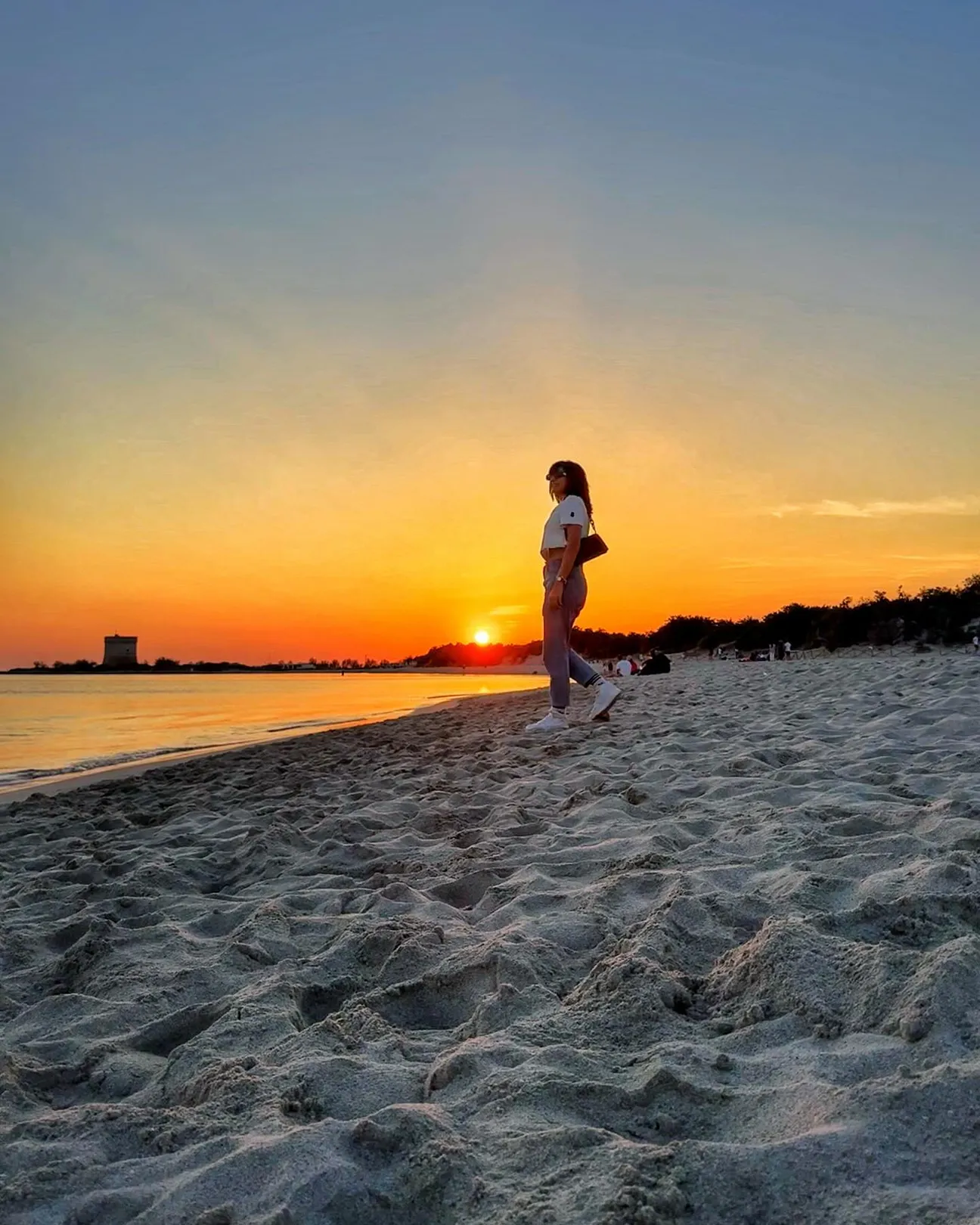
Small free coves with sand and low rock
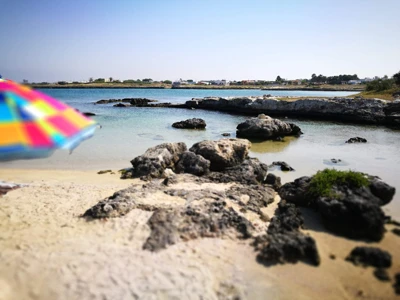
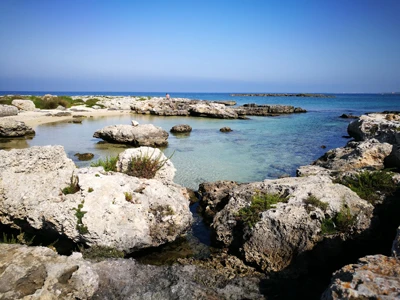
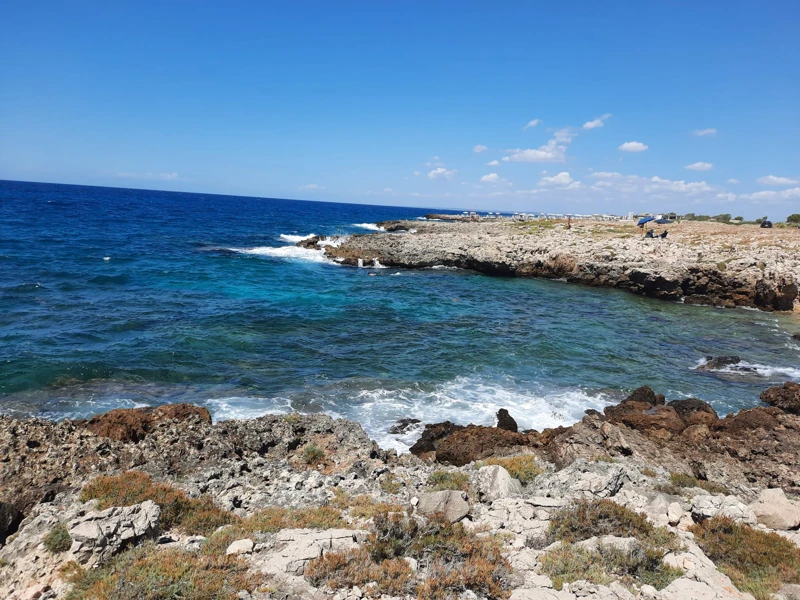
Frascone has sandy pockets separated by low rocky sections. Storms can change the amount and shape of sand, so it is better understood as a set of natural coves rather than three permanently identical beaches.
For sand
Arrive early: sandy space is limited and fills quickly on busy days.
Inside the Regional Natural Park
The beach lies in the Palude del Capitano area within the Porto Selvaggio and Palude del Capitano Regional Natural Park. Coast, wetlands, spontaneous vegetation and habitats of community interest are protected here.
Essential rule
Use marked routes, do not create shortcuts through vegetation and do not collect plants or natural material.
Advertisement
Mare Piccolo and springs: noticeably colder water
In the southern sector a sheltered cove known as Mare Piccolo receives freshwater springs entering the sea. The water can therefore feel much colder even in midsummer.
With children
The temperature change can be surprising: enter gradually and always check depth and footing.
The spunnulate: the karst landscape behind the beach
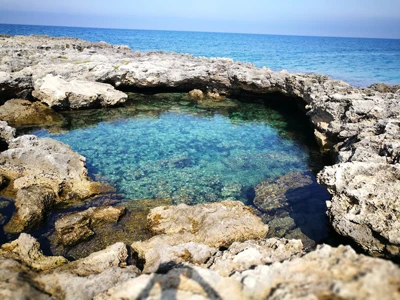
Palude del Capitano contains sink-like depressions formed when the roofs of old underground cavities collapsed. Locally they are called spunnulate and contain brackish water and wetland vegetation.
Not swimming pools
View them from permitted paths and respect signs and habitats; they are protected natural features, not alternative bathing pools.
Mixed, variable seabed
Entry can be easier in front of the sandy pockets, while rock and stones dominate the edges. Springs and the shape of the coves mean depth is not uniform.
Before swimming
Check your exact entry point and bring water shoes if moving across rocks.
Families: pleasant, but choose the cove carefully
Small sandy patches and some gentler entries can suit families, but Frascone remains a natural beach with rocks, cold water in places and little room.
Young children
Choose the simplest sandy section, stay close and do not let children play inside protected vegetation.
Walk from the parking area
Frascone is not reached by driving to the waterline. A parking area and pedestrian connections have historically served the coast and Palude del Capitano; the final section is on foot.
Footwear
Light shoes or secure sandals are useful, especially if combining the beach with the natural area.
Parking: keep the car outside the natural strip
There is a parking area known as Frascone, but charges, availability and management can change. The protected coast is designed primarily for pedestrian access rather than parking beside the sand.
Before leaving the car
Check current signs and never park on vegetation, paths or access routes.
Seasonal kiosk nearby, but few beach facilities
A small seasonal kiosk operates nearby and can be useful for food and drinks. It should not be confused with a fully serviced beach club: showers, toilets, hire and assistance are not guaranteed on the free beach.
Come prepared
Bring water and essentials and check the kiosk is open before relying on it.
Accessibility: improved paths, no specific assisted sea access verified
Pedestrian routes in the Palude del Capitano area have been planned and improved over time, but we found no current confirmation of a bathing boardwalk, beach wheelchair or public assisted-bathing service specifically at Frascone Beach.
Reduced mobility
Check in advance with the park manager or equipped facilities on the Nardò coast for the most suitable sea access.
Sirocco and wind: protected vegetation is not shade to occupy
The shape of the coves can make some sections relatively sheltered in certain conditions, but wind and waves vary daily. Vegetation behind the beach is protected habitat and should not be occupied simply to seek shade.
Before settling
Watch the sea and choose a stable spot without entering shrubs, dunes or restricted areas.
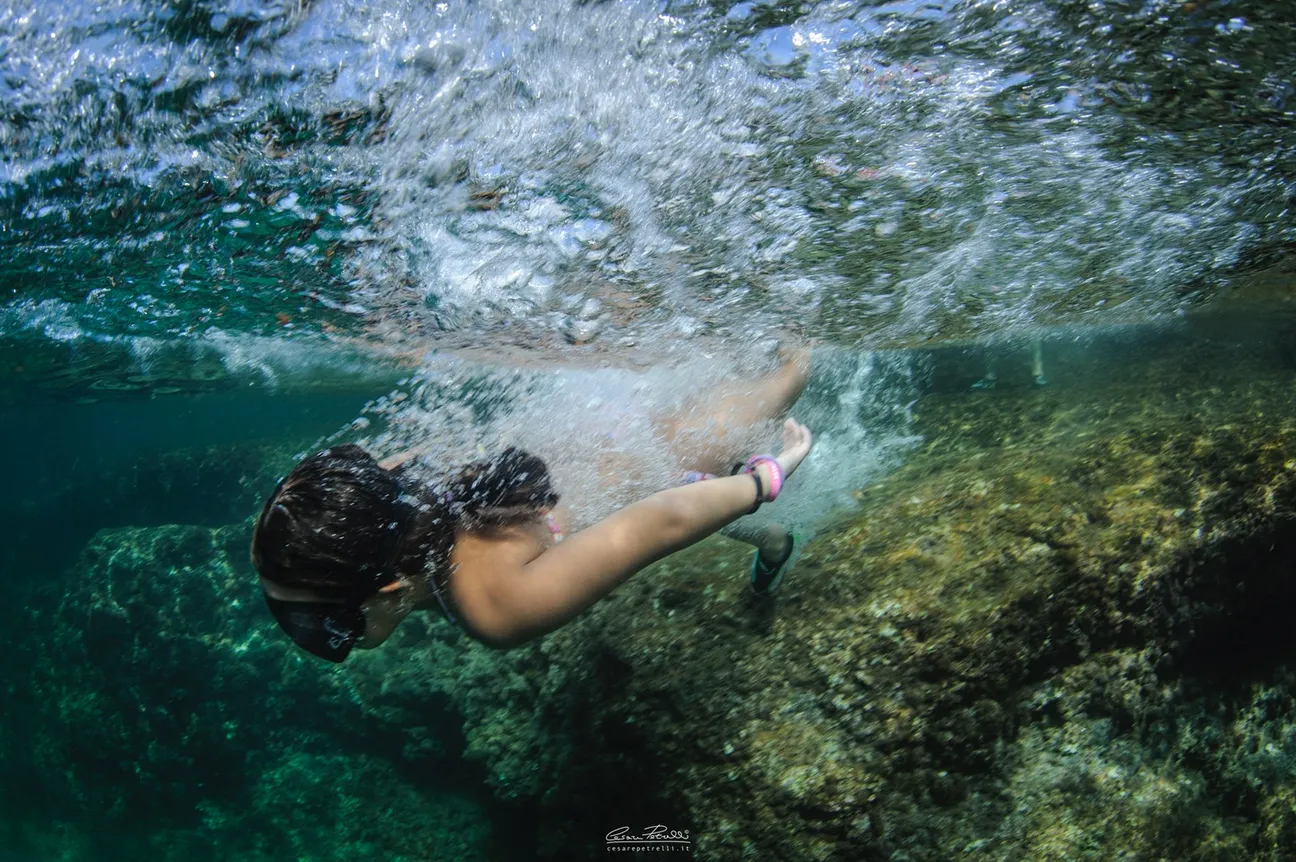
Snorkelling: rock, sand and spring water
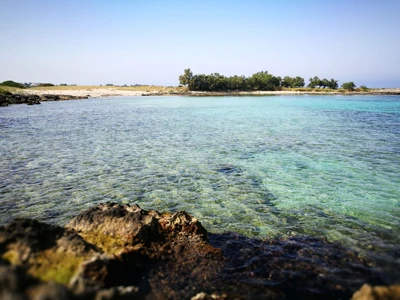
The mix of rocky and sandy seabed is enjoyable to explore near shore in calm conditions. Freshwater springs can also create noticeable temperature changes while swimming.
How to do it
Wear water shoes, remain close to shore and do not enter protected sinkholes or cavities.
The islet is close, but it is not an automatic swim
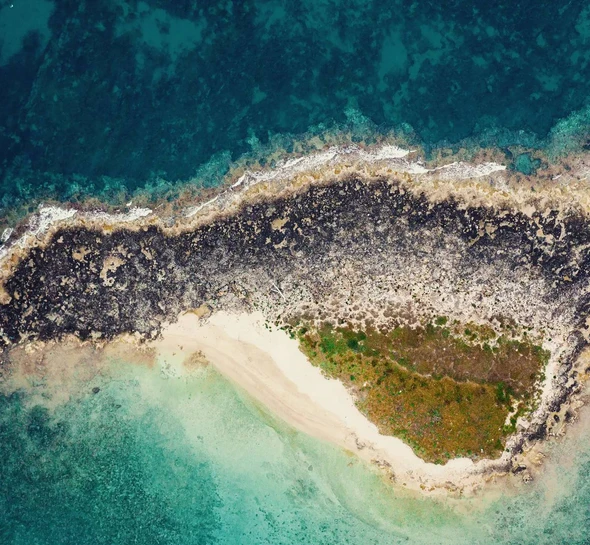
A small islet lies off the coast and adds to Frascone's distinctive landscape. It may look very close, but wind, current, boat traffic and swimming ability all change the risk.
If considering it
Assess real conditions and do not make the crossing with children or weak swimmers.
Frascone is also a Roman archaeological site
Research has documented a coastal settlement dating at least to the Roman Republican period, probably involving a villa and productive/maritime activities, with later changes in the Imperial era.
Respect the remains
Do not move stones or collect fragments: the place is archaeologically important as well as scenic.
Crowds: it is no longer a secret beach
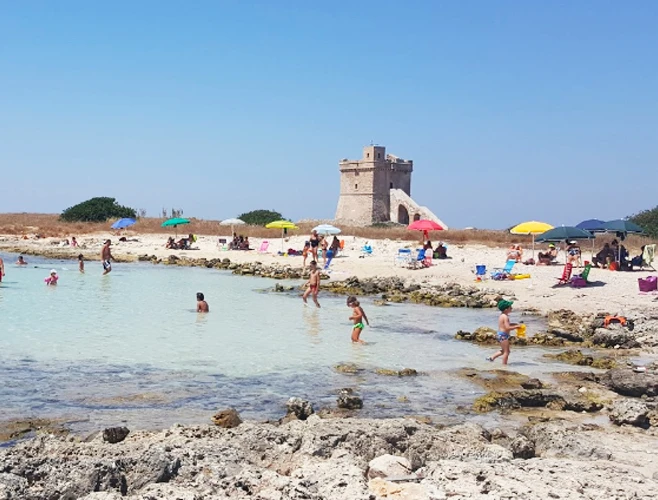
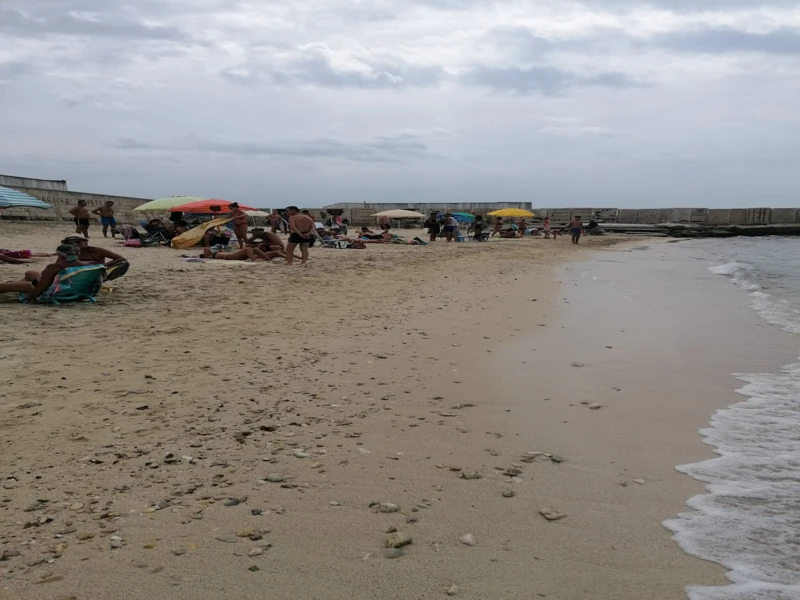
Frascone is well known today, so quiet cannot be promised in August. The coves are small and a modest number of visitors can fill the available sand.
For more peace
Go early or late afternoon and keep passages clear.
Sant'Isidoro and Porto Selvaggio are Blue Flag in 2026
In 2026 both coastal areas framing Frascone appear among Nardò's Blue Flag locations.
Interpret correctly
The award concerns coastal quality and management and does not mean every small cove has lifeguards, showers or equipped accessibility.
Recent years: restoration and more orderly access
Environmental works removed illegal buildings, replaced a concrete bridge with a wooden one, restored dry-stone walls, protected dunes, improved pedestrian routes and replanted vegetation.
For visitors
Use the intended paths: restoration only works if informal shortcuts are not recreated through vegetation.
Best for
Families used to natural beaches, couples, snorkellers, nature and archaeology lovers and visitors who prefer small free coves to a large beach club.
Main strength
Sea, wetland, springs and protected landscape form one experience.
Less suitable for
Anyone wanting a broad continuous beach, parking beside the towel, full beach-club facilities, guaranteed shade or already verified assisted sea access.
For more comfort
Consider Sant'Isidoro's main beach or an equipped facility on the Nardò coast.
What to bring
Water, sunscreen, a light parasol, towel, water shoes and snorkelling mask. If visiting Palude del Capitano too, add footwear suitable for natural ground.
Important
Avoid bulky equipment: space is small and access routes must stay clear.